Chris White – Atlantic 70 Catamaran – 2018
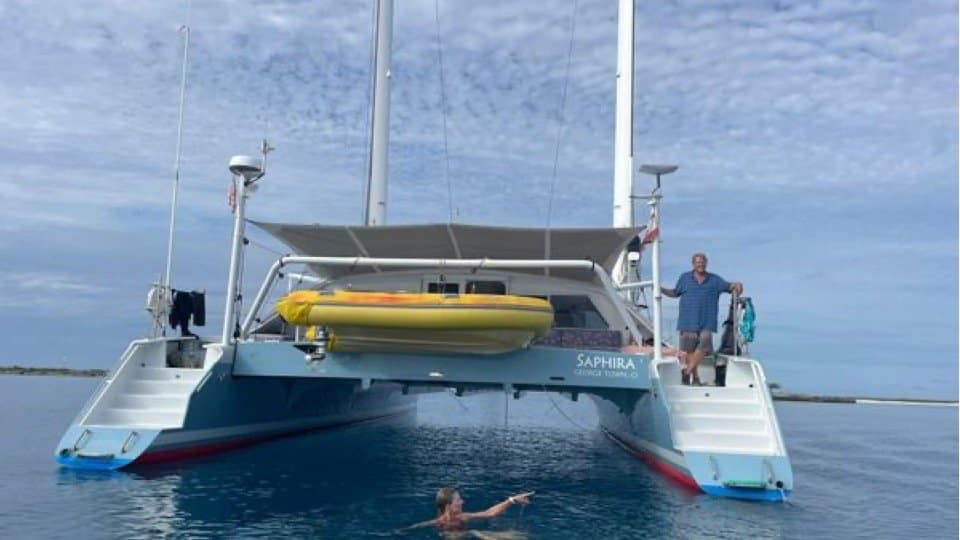
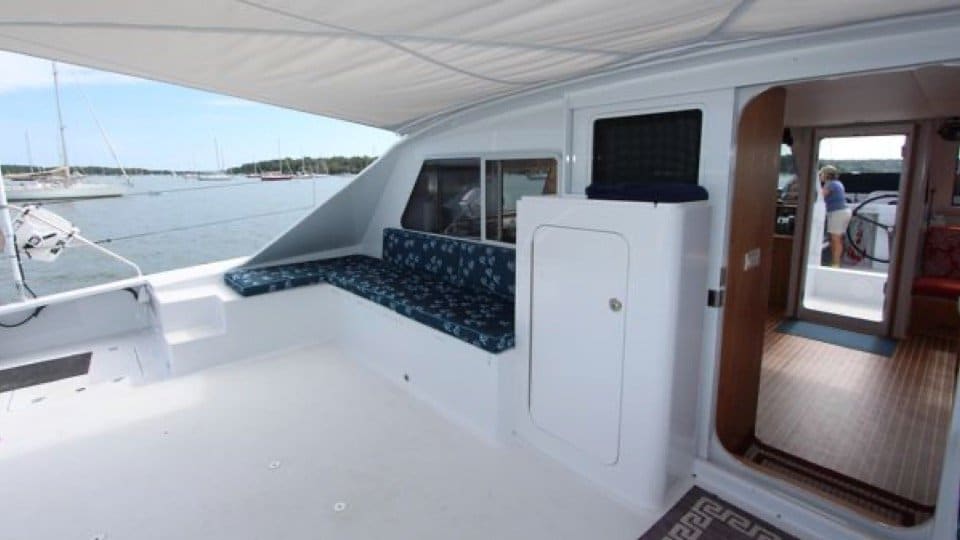
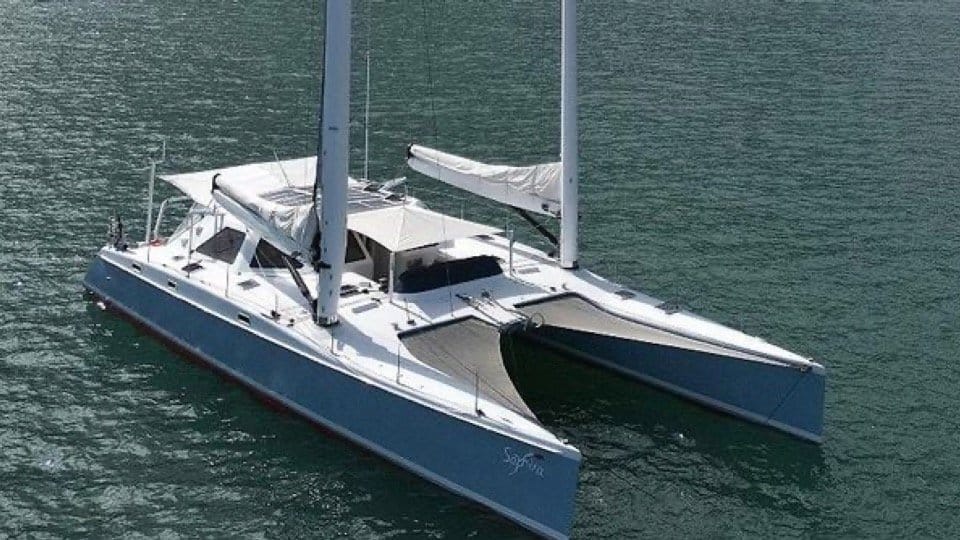
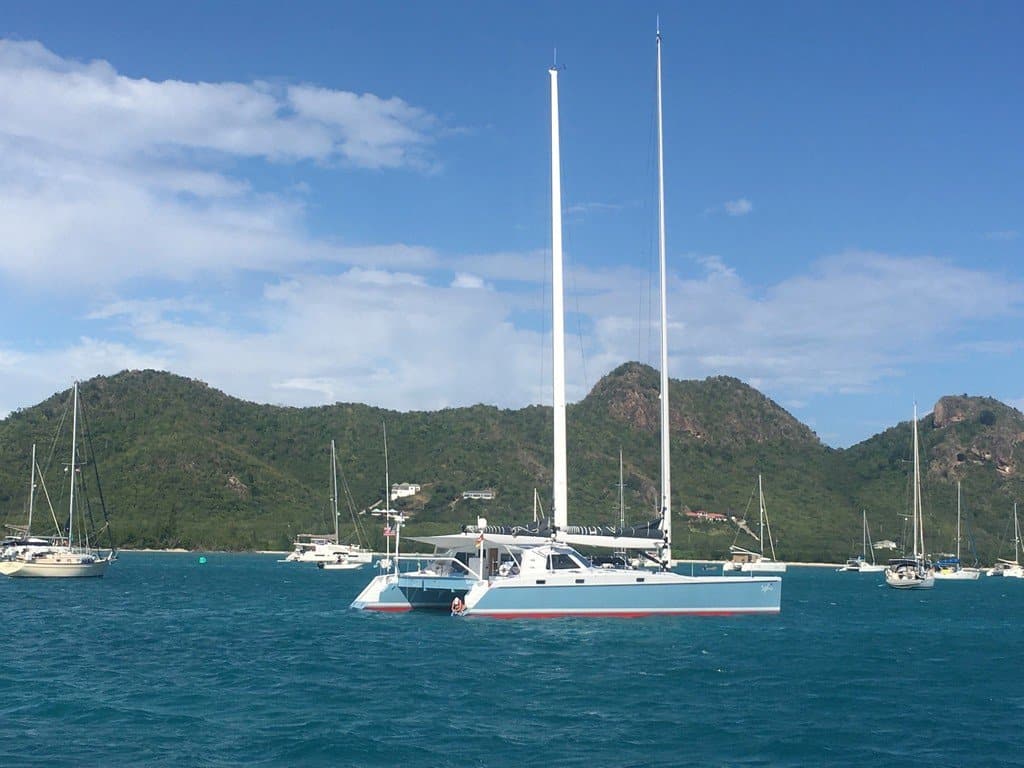
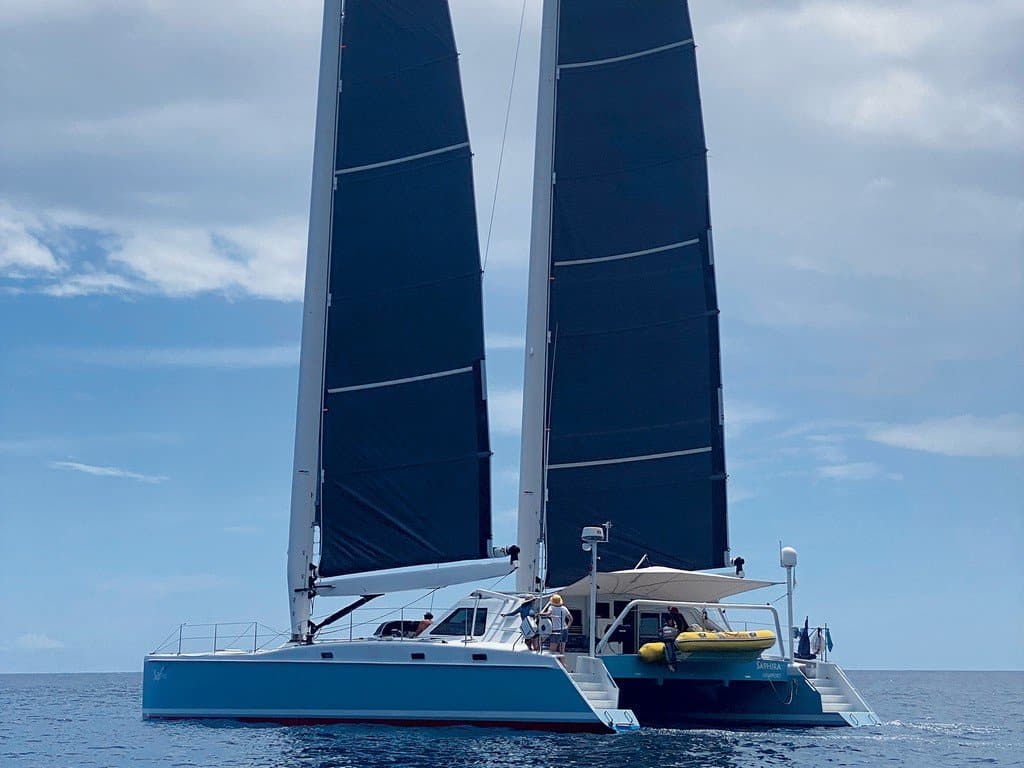
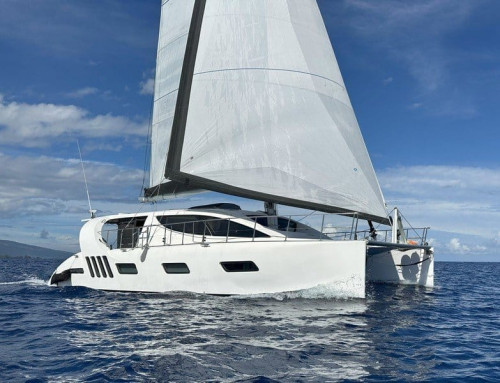
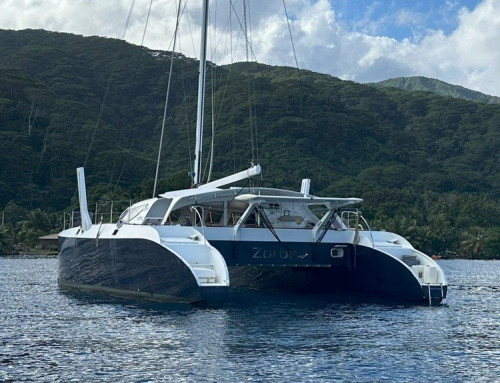
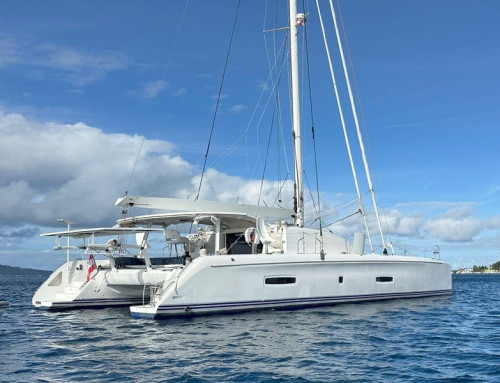
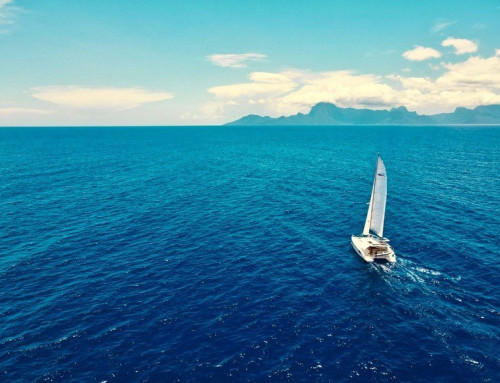
Saphira is a Chris White designed Atlantic 70 high performance cruising catamaran lying in Papeete in French Polyensia.
The design is unique, with Chris White as architect and built by Goetz Composities in Bristol, Rhode Island, a company known for its decades of high-quality construction, including Americas Cup boats
The 70’ hulls give speed and sea-kindliness. The beam, weight and sail area are similar to a performance cat in the 55’ to 60’ range. The overall result is a boat that is effortlessly fast and comfortable.
The quality of the build is impeccable. All structural elements are built from vacuum bagged epoxy pre- preg carbon fiber with core-cell foam to ensure the lightest weight and most durable composite. Crossbeams are built of uni-directional pre-preg carbon fiber with foam cored epoxy/carbon fibre bulkheads. Interior joinerwork, floorboards and furniture are all cored panels to provide stiffness at low weight with lovely veneer for good looks.
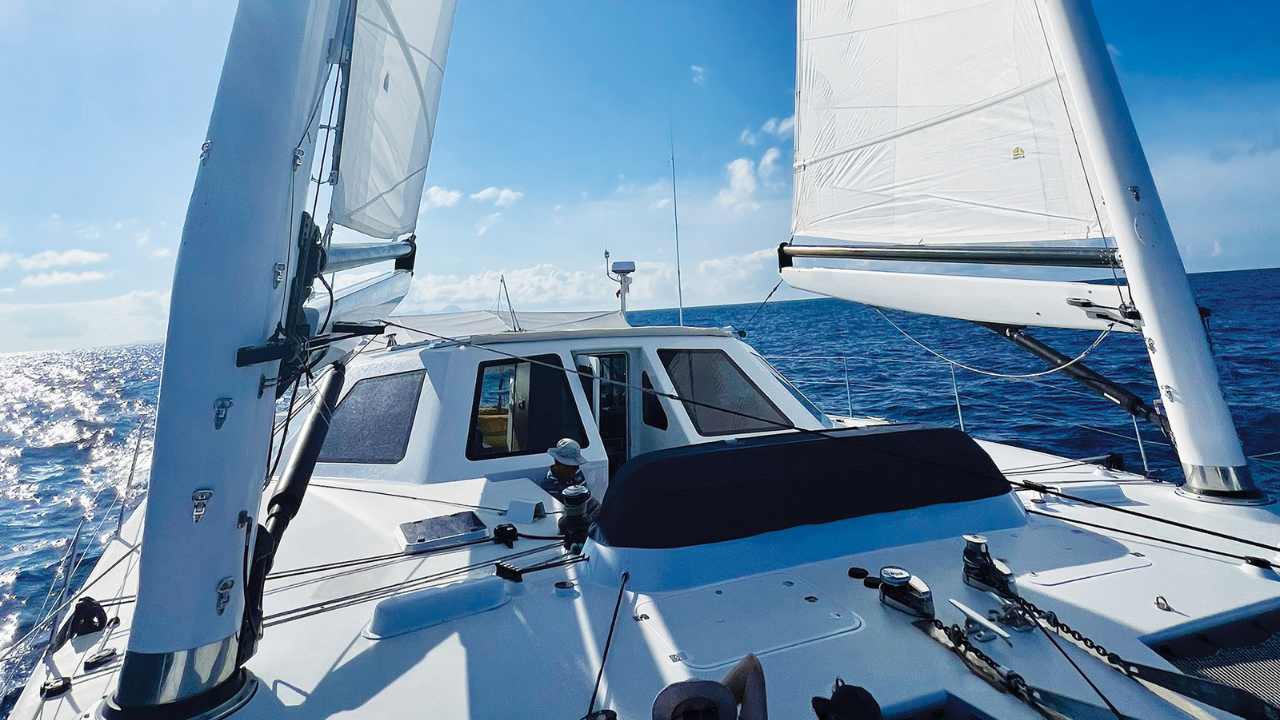
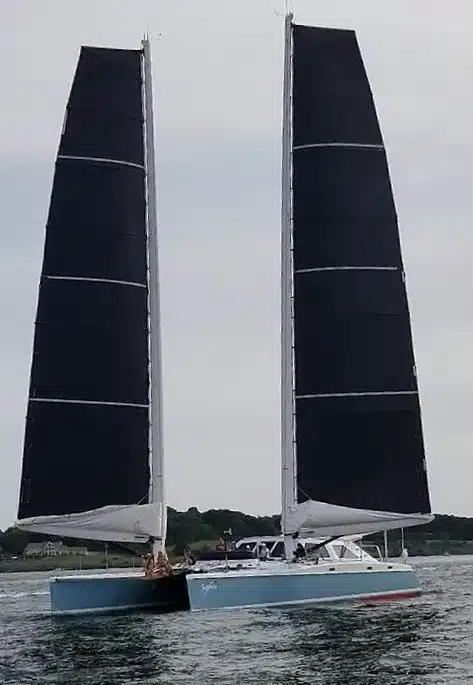
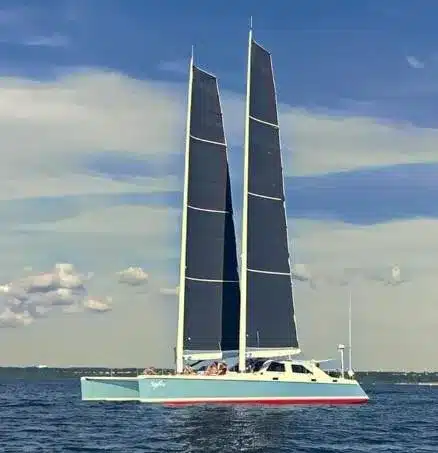
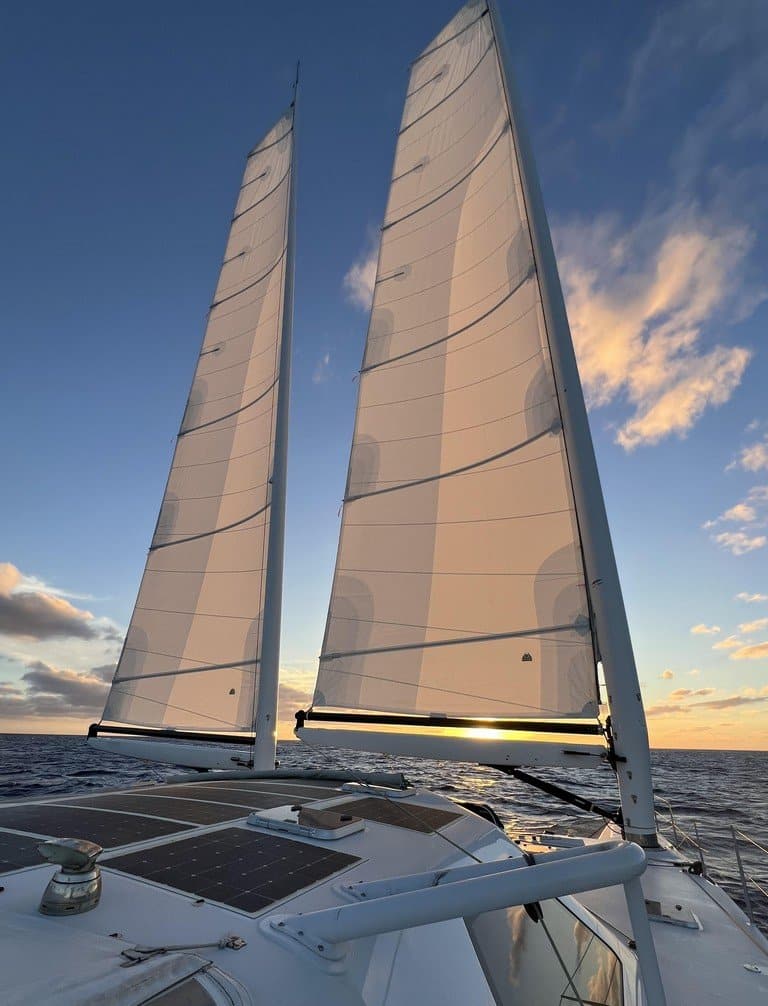
Her rig is made of two airfoil shaped tapered freestanding carbon masts which turn in JP3 spherical bearings at the deck and the bilge levels. Extensive Finite Element Analysis structural modelling and final engineering was done by SDK Structures, also known for their work on high tech racing and Americas Cup boats.
The concept behind Saphira was to develop a cruising catamaran that could average at least 250 nautical miles a day safely, when sailing offshore with an older, experienced couple. Saphira has averaged 265 miles a day in its six seasons of cruising from Rhode Island to the Caribbean multiple times, as well as through the Panama Canal, up the west coast of Central America to San Diego and out into French Polynesia.
The owners, who were integral to and deeply involved in the design process, have approximately 175,000 miles of sailing history including a trip around the world with Cape Horn and north of Spitzbergen/Svalbard, as their farthest points south and north. Their experience shows up in the big and small details that make the boat easy to handle and, equally important, a joy to live on.
They sailed her from Rhode Island to the Caribbean multiple times, as well as through the Panama Canal, up the west coast of Central America to San Diego and out into French Polynesia. In total Saphira has covered approximately 25,000 miles over her six seasons and has the parts and the maintenance to continue cruising the world’s oceans.
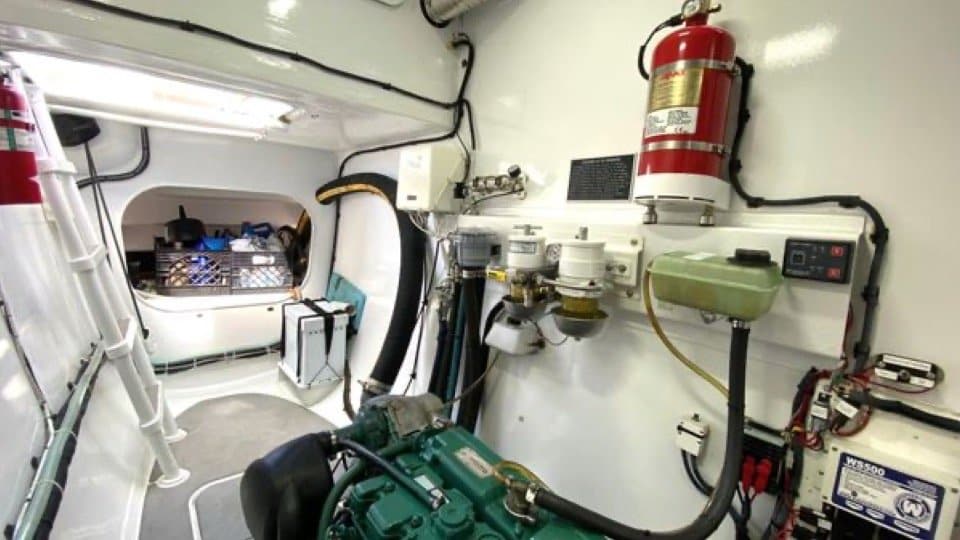
One critical aspect of the design was to make maintenance easier for the owners. The aft part of each hull has full standing headroom engine rooms. Literally, you can walk around the engine. This makes maintenance, like checking the oil or cleaning the sea water strainers, which is rarely easy on sailboats, easy to do. It is the same with a watermaker … Saphira may be the only cruising sailboat where the watermaker has its own cabin with full standing headroom.
Masts rotate relative to the boat using the mainsheets, so they can rotate 180 degrees each way without breaking anything. In fact, they were made to rotate 270 degrees just to make sure they were safe. If there is ever a concern that the boat is dangerously overpowered, you just blow off the mainsheets and the sails “flag to the wind.” Masts rotate forty degrees port and starboard relative to the boom for sail shape and this is controlled from the cockpit via a hydraulic cylinder.
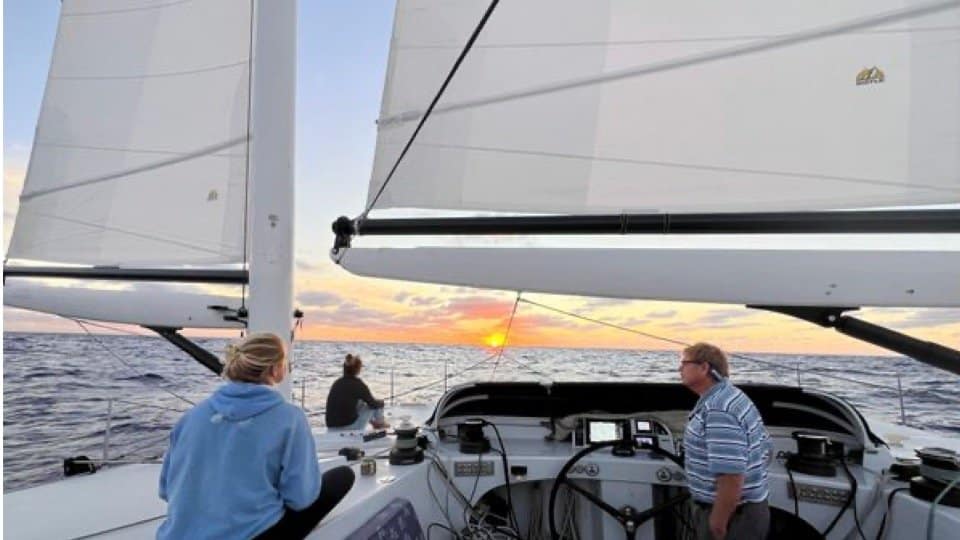
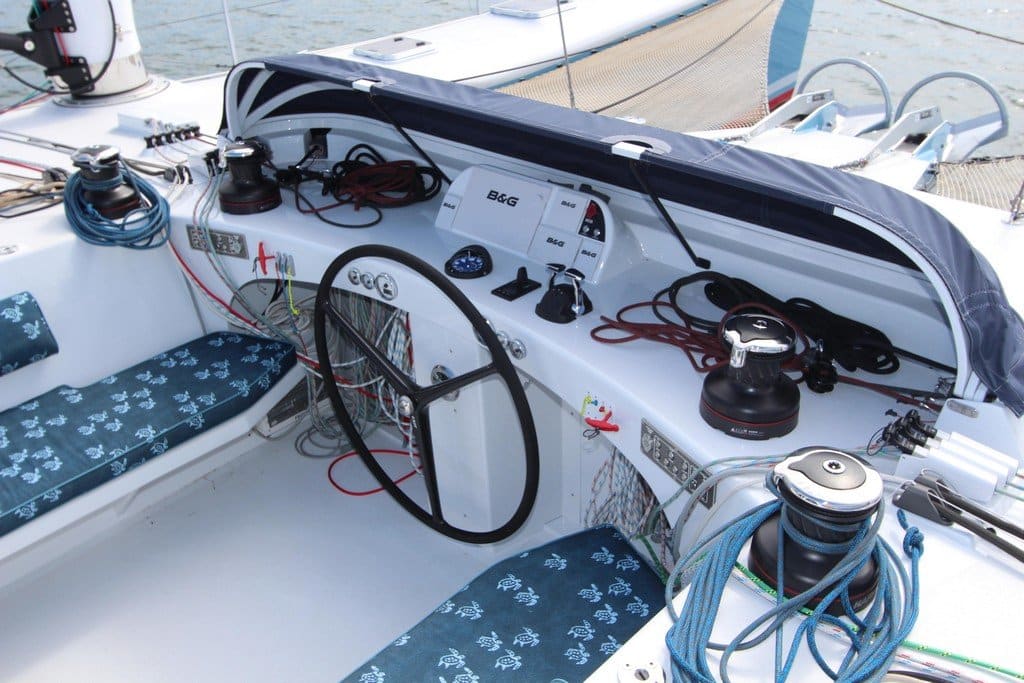
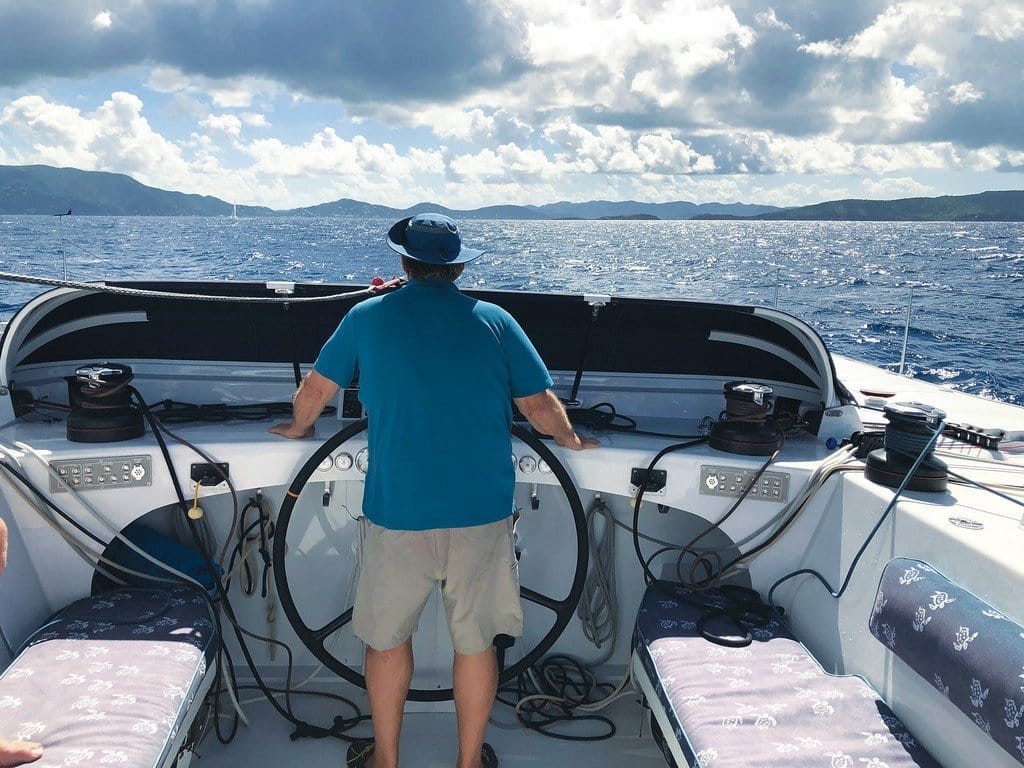
All controls are in the forward cockpit. This concept was invented by Chris White and then copied by Gunboats and others. Sails are furled with Bamar hydraulic roller furling on mandrels above the boom, so the operator can “see” the roll at all times. Sails are “vang sheeted” with a large Harken hydraulic cylinder. No topping lift needed. No block & tackle at the end of the main boom, which just adds friction and many more feet of line that has to run freely to depower. The 2 Square Top Mainsails are from Doyle Sails, 2023. Radial head dacron, two ply leech. Super durable offshore construction. One spare Doyle “Stratis” carbon fiber composite, 2019.
The daggerboards and rudders are of course made of cored carbon fiber.
For safety each hull has a “false” bow section plus two collision bulkheads forward. There are multiple watertight compartments throughout the boat.
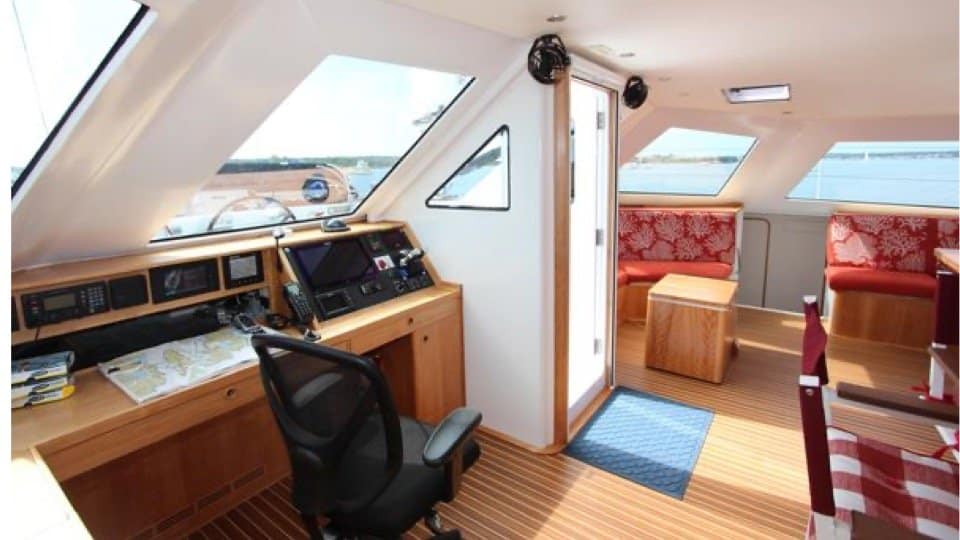
The engines are Volvo D2-75 diesels with saildrives (April 2024 Engine Hours: Port – 1547; Starboard 1576). There are dual Racor primary fuel filters to allow for switching and secondary fuel filters on the engines. Dual “ZF Micro Commander” electronic single lever engine controls mounted at pilothouse inside helm and outside in the forward cockpit. Three blade bronze folding type propellers by FlexOFold
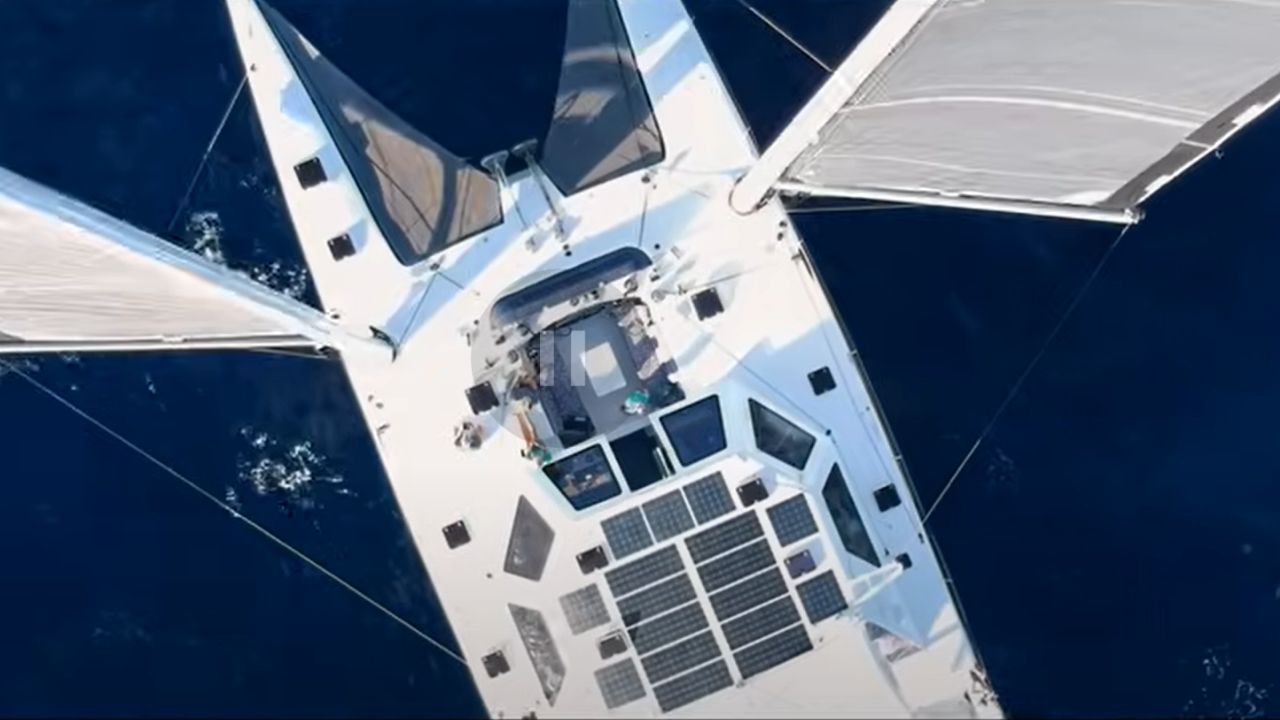
The house battery bank is 900 Ah 24 V lithium with 2.1 KW of Solbian solar panels free of shading.
The electronics are all B&G with a 16 inch chartplotter at the Nav Station, a 12 inches chartplotter in the forward cockpit and a 9 inch chartplotter in the owner’s cabin. There is one depth sounder in each hull, one having a forward scan. There is of course Starlink and an Iridium. There are dual bow anchor rollers and 2 Rocna 40 kg anchors plus a stern anchor.
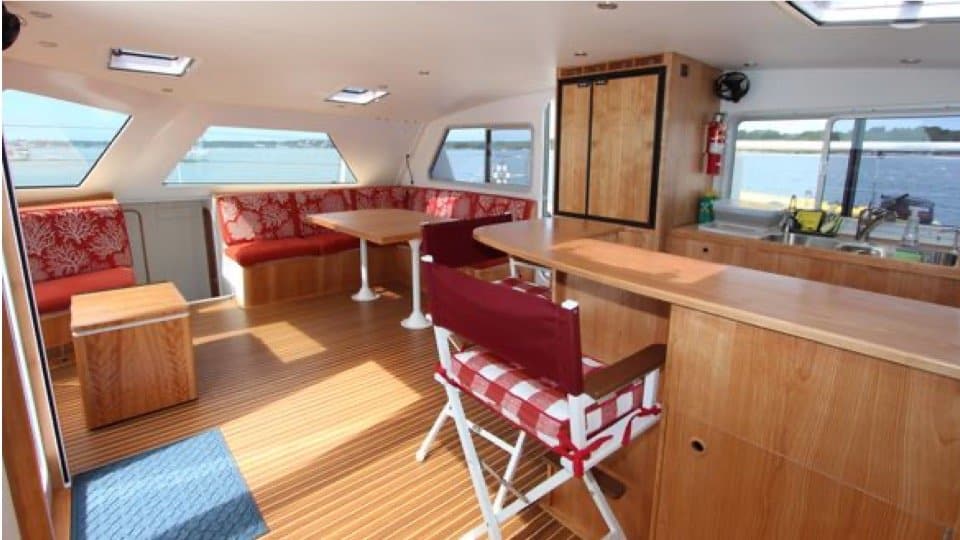
For comfort there are 2 stand-alone air-conditioning units and a heating system. There is a mico-wave oven, two fridges and one fridge-freezer.
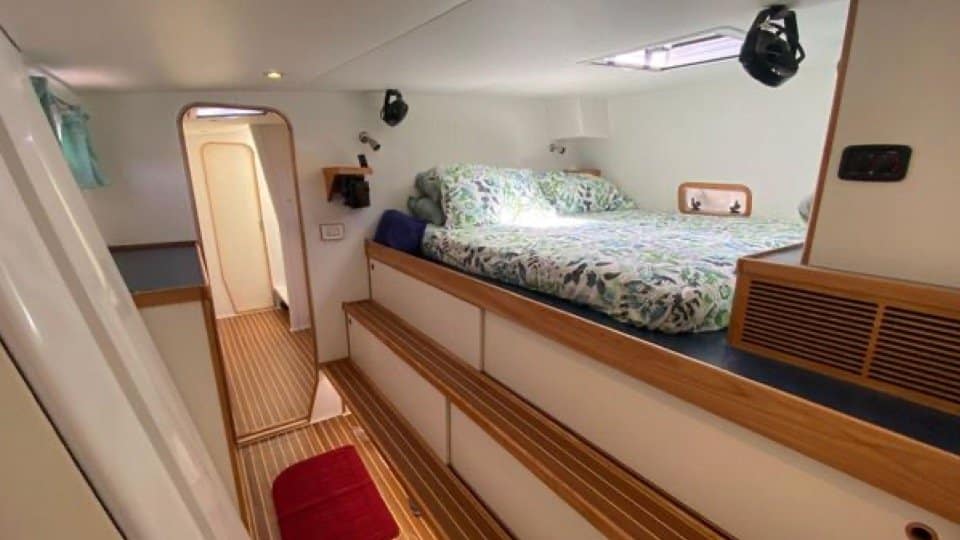
There are two master stateroom cabins with king-sized berths and 2 midship cabins. On port the midship cabin is set up as a working area and starboard as a dressing area.
The safety equipment is complete, and the inventory of tools and spare parts is impressive.
Saphira is one of the most advanced performance multihulls ever built. She was designed for a very experienced couple who spared no expenses to make her an exceptional, fast, safe and easy catamaran. She is immediately recognizable, but her understated interior shows real elegance and a taste for adventure.
Specifications
Videos
Photos