Buying a Boat in Polynesia: What You Need to Know About Formalities and Taxes
Turquoise lagoons, steady trade winds, a deep sense of freedom, well-adapted maintenance infrastructure, and a high level of safety… Buying a boat in Polynesia is a dream for many. Each year, new boaters choose to head to the territory’s magnificent lagoons to enjoy extraordinary cruising.
But are you familiar with the administrative formalities and local tax implications? Import regulations, choice of flag, residency status… In this article, Sail Tahiti guides you step by step to ensure your boat purchase project in Polynesia runs smoothly.
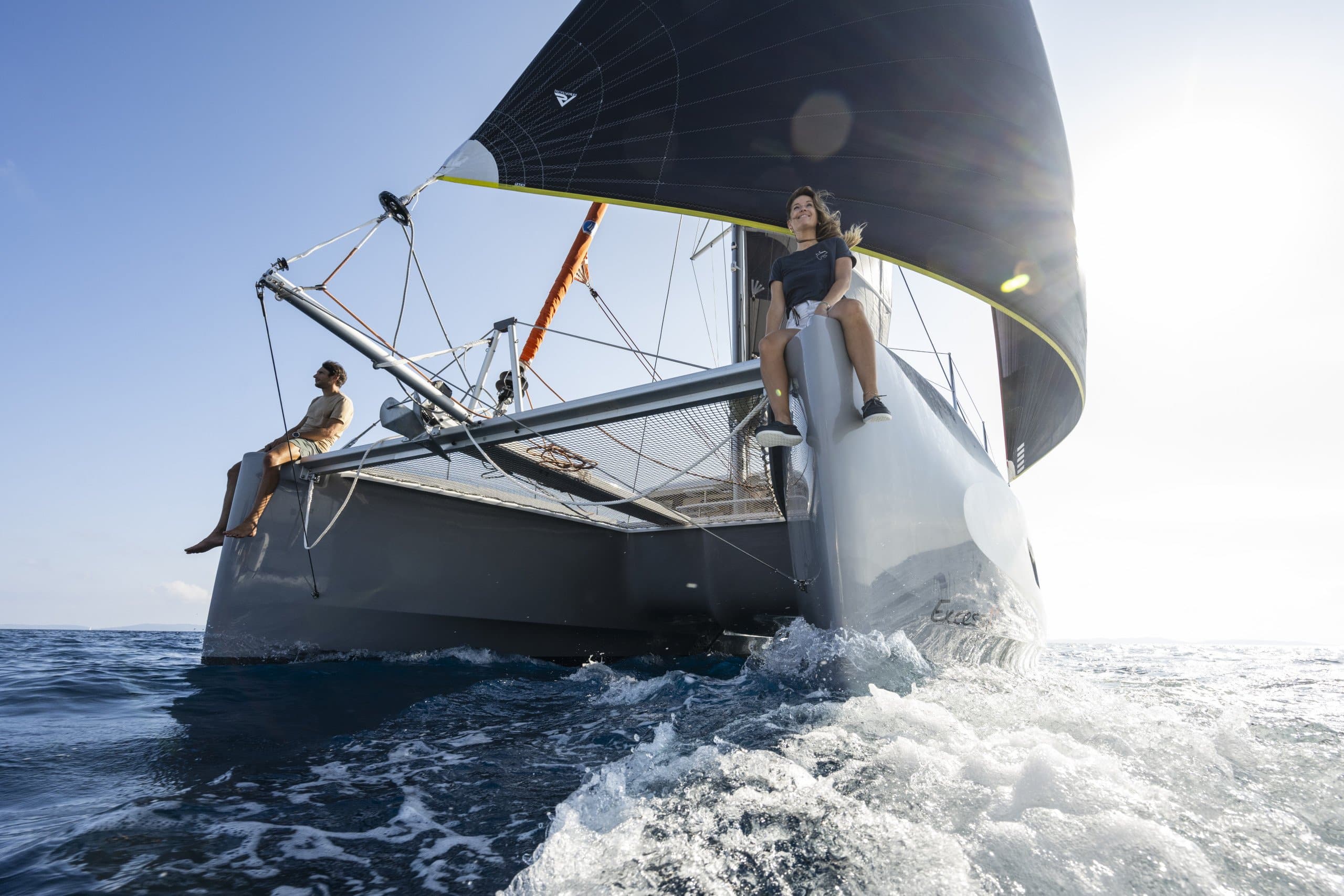
Buying a Boat in Polynesia: A Popular Destination for Sailors
Polynesia, a Dream Territory for Boat Buyers
An idyllic stopover in the Pacific, French Polynesia is often the starting point for great nautical adventures. Stable year-round sailing conditions and the richness of its islands and anchorages attract both long-distance cruisers and coastal sailors.
Many navigators choose to buy a powerboat or sailboat directly in Polynesia. This allows them to avoid long ocean crossings to the Pacific and benefit, on site, from the comfort and autonomy needed to fully enjoy the archipelagos.
Read more: 10 destinations to discover on a motor yacht cruise in French Polynesia.
The Right Time to Buy: Before, During, or After a Voyage?
Buying a boat in Polynesia can happen at different stages.
Some owners choose to have a new boat delivered to Polynesia from Europe to avoid crossing the Panama Canal or facing uncertain weather conditions. Others prefer to experience the journey themselves by sailing to Polynesia on their own boat.
A third common profile includes sailors who discover Polynesia during a round-the-world voyage, fall in love with it… and decide to settle there. Finally, some simply want to enjoy the lagoon experience without long passages and purchase a pre-owned boat directly in Polynesia, where the market is very active.
Buying locally is often the most logical solution, both logistically and fiscally. Having local support can make all the difference in securing your purchase project.
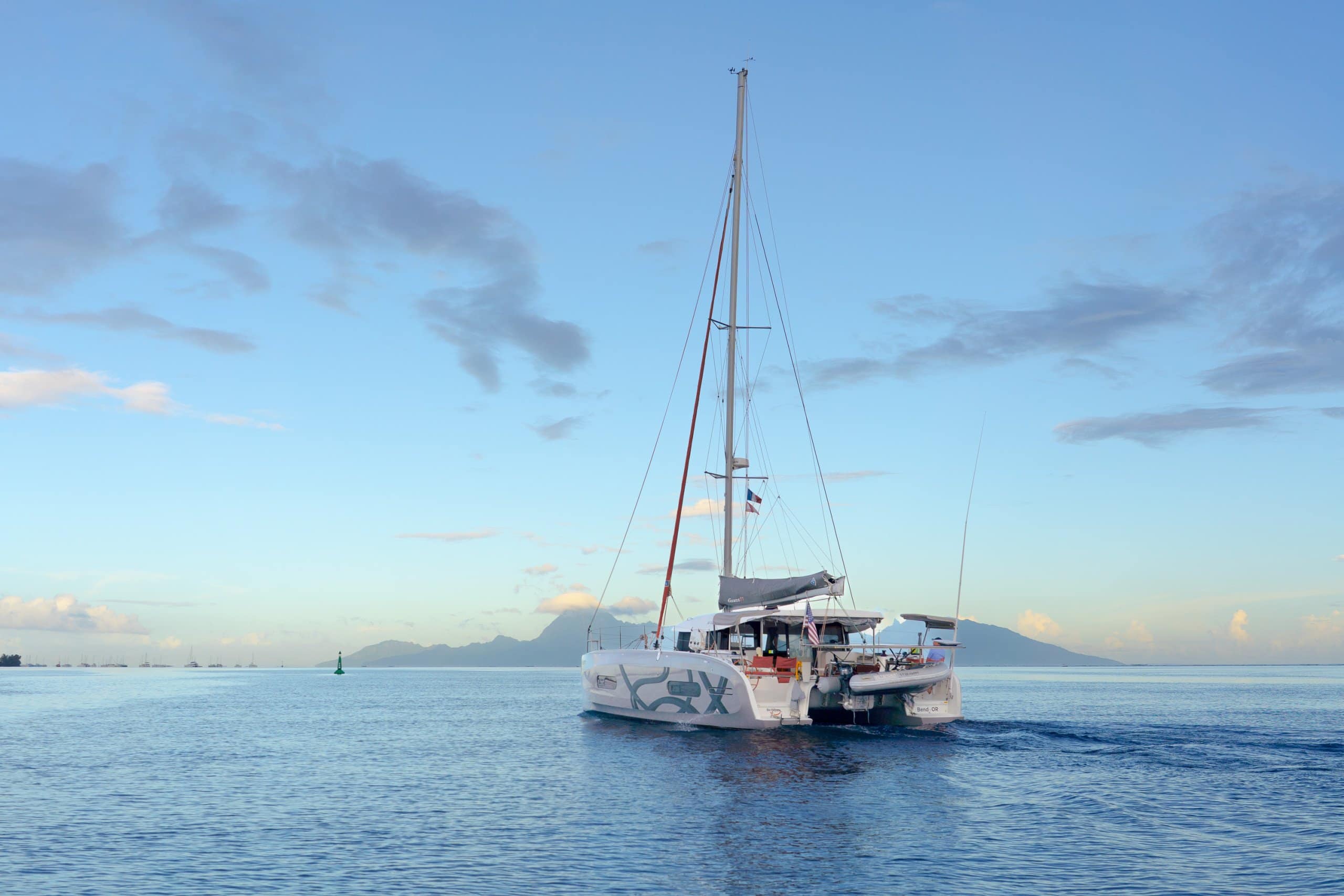
Boat Formalities in Polynesia: What You Need to Know
Before Entering Polynesia by Boat
Although geographically remote, French Polynesia is part of the Schengen area for the movement of people. European nationals may enter freely, without a visa, and stay as long as they wish.
For non-Europeans, a 90-day tourist visa is automatically issued upon arrival.
However, any extension requires applying for a long-stay visa at a French embassy in the country of origin before departure.
Entry conditions vary depending on whether you arrive by air or by sea. A non-European owner arriving by sailboat, for example, must prove their ability to leave the territory within the permitted time frame.
Two options are available:
- Present a refundable return airline ticket
- Provide a letter of undertaking (also called a bond letter) issued by a local maritime agent, guaranteeing coverage of repatriation costs in case of overstay. This paid service is essential for navigating legally and with peace of mind.
Temporary Admission: Stay 24 Months Without Paying Import Taxes
In Polynesia, the temporary admission regime is highly advantageous. It allows non-resident boaters to arrive without immediately paying import duties.
This regime applies for 24 months, under three conditions:
- The boat must not be used for commercial purposes
- The owners must not be tax residents in Polynesia
- They must not engage in paid work within the territory
This system is particularly appreciated by world cruisers. For example, a couple or family arriving via the Panama Canal can enjoy two years of tax-free sailing in French Polynesia.
After the 24-month period, owners have several options:
- Take the boat out of the territory
- Import the boat and pay applicable taxes
- If planning to keep the boat long term, consider entrusting it to a third party for charter management (which implies a different tax regime, discussed below)
Boat Taxation in Polynesia: Import Rules
Taxation Varies by Vessel Type and Origin
One of the major advantages of buying or importing a boat in French Polynesia lies in its particularly favorable maritime taxation. Unlike Europe, where VAT can exceed 20%, import taxes in Polynesia are significantly lower — and sometimes even zero.
When a boat arrives in Tahiti by cargo ship or under its own power, it is subject to customs regulations applicable to imported goods.
Taxation depends on several criteria:
- Type of boat (sailboat or motorboat)
- Engine type (outboard or inboard)
- Length of the vessel
- Hull type (rigid or semi-rigid)
- Intended use
- Place of manufacture (local, European Union, or elsewhere)
For example:
- A traditional sailboat imported from the European Union by cargo will be taxed at around 7% of its declared value — far less than France’s 20% VAT.
- An inboard motor yacht over 12 meters is taxed at less than 9%, VAT included.
- Semi-rigid boats are subject to 9% import duty plus 16% VAT, totaling 25%.
- Outboard motorboats are more heavily taxed due to a local development tax designed to protect domestic shipyards. A 6-meter fiberglass motorboat equipped with a 100 HP outboard engine may face taxation of around 30% of its value, plus 16% VAT.


Expert Insight – David Allouch, General Manager at Sail Tahiti
“In Europe, VAT rules have recently become stricter. A boat purchased with VAT paid in Europe loses its VAT-paid status in two cases:
If it remains outside the European Union for more than three consecutive years
If it is resold outside the EU
This means that if you leave Europe for an extended voyage with no intention of returning soon, or if you plan to resell your boat in Polynesia, you lose the benefit of VAT paid at purchase. In that context, it becomes more relevant to buy a boat VAT-free from the outset.
With specialized support like that offered by Sail Tahiti, you can find the right solution to simplify the import process and optimize potential resale outside Europe.”
Buying a Boat in Polynesia: Should You Register Locally?
Keeping Your Original Flag: Pros and Cons
Registering under the Polynesian flag is not automatic. Many owners choose to keep their original country’s flag, especially if they are not tax residents in Polynesia.
For example, the owner of a German-flagged boat may keep German registration even after importing the vessel. This is common among transient crews or those wanting flexibility for international resale. It also avoids certain resale fees, such as the 5% transfer tax applicable to boats registered locally.
On the other hand, under the Polynesian flag, you are not subject to the annual navigation tax imposed in mainland France.
Local Registration
Local registration becomes mandatory if you are a tax resident in Polynesia.
If the boat is used commercially, it must be imported and may benefit from registration under the Polynesian flag to obtain Commercial Vessel status, which allows access to a reduced VAT rate on charter operations.
Additionally, if you benefit from a tax incentive scheme for purchasing your boat, it must be registered in Polynesia.
It is essential to understand the fiscal and legal implications: switching to the Polynesian flag means that any local resale will be subject to the 5% transfer tax mentioned earlier.
Renting Out Your Boat or Living Aboard: Tax Implications
Chartering Your Boat in Polynesia
Chartering a boat in French Polynesia can be profitable, provided local tax rules are respected.
Any economic activity, including seasonal boat rental, requires the creation of a “patente” — the Polynesian equivalent of self-employed status. Procedures are relatively simple, and this status offers reduced taxation up to €80,000 in annual turnover.
By default, rental income earned in Polynesia is subject to a 10% withholding tax deducted by the tax authorities. Depending on revenue levels and the owner’s nationality, it may be more advantageous to create a local company or appoint a tax representative.
For example, a Swiss owner who entrusts their catamaran to a Tahiti-based charter management company will declare income in Polynesia, with taxes handled by the operating company. This structure allows the owner to generate returns while remaining compliant, without daily management responsibilities.
Living Aboard and Residency
For those dreaming of living aboard their sailboat or motor yacht in the tropics, it is entirely possible.
Europeans wishing to settle long term must register with the CPS (Caisse de Prévoyance Sociale) to benefit from healthcare coverage equivalent to the French social security system. The cost is reasonable, around €70 per month.
If you plan to launch a professional activity (for example, remote consulting while living aboard), you will also need to open a “patente.”
Contrary to common belief, the cost of living in Polynesia is not necessarily higher than elsewhere — especially if you adopt a local consumption pattern. Imported goods are heavily taxed, but local products and services remain affordable.
Read more: Choosing the best liveaboard motorboat for Polynesia
Buying a Boat in Polynesia: Get Professional Support
Are you planning to buy a boat to sail in French Polynesia? Sail Tahiti can assist you with every step.
Our expertise covers delivery and importation, taxation, onboard installation, and full compliance with local regulations.
Contact our team to avoid costly mistakes and save valuable time.

FAQ – Everything You Need to Know About Buying a Boat in Polynesia
Do I have to pay VAT on import if my boat comes from Europe?
Yes, but it is Polynesian VAT. You do not pay mainland French VAT. Imported boats are subject to local taxes, generally much lower than in Europe. For example, a sailboat purchased VAT-free in Europe may be subject to around 2% import duty and 5% Polynesian VAT — compared to 20% VAT in the EU. Rates vary depending on vessel type, so verification is essential.
Can I work from my boat in Polynesia?
Yes, provided you comply with local regulations. European residents may create a “patente” to operate as self-employed professionals. This system offers favorable taxation with light charges. Registration with the CPS is strongly recommended for healthcare coverage.
Can I leave my boat in Polynesia without living there year-round?
Yes — and it is common practice. Many owners leave their boats in Polynesia for months or even years under the 24-month temporary admission regime (without paying taxes, under conditions). Some entrust their boats to local management companies for charter, maintenance, and handling of administrative and tax matters in their absence.
What is the best flag for a boat based in Polynesia?
It depends on your situation. If you are not a Polynesian resident, keeping your original flag is often advantageous, particularly to avoid transfer tax. However, if you reside in Polynesia or operate commercially, local registration becomes mandatory.