SAILING SABBATICAL : CHOOSING BETWEEN THE CARIBBEANS AND POLYNESIA.
You’re planning to spend your sabbatical year sailing. The family is eager to get started, but the destination is still to be decided. The Caribbean or Polynesia?
You’ve decided to go on a sailing trip for a few months, a year, or even longer. How will you choose between the West Indies and Polynesia? What criteria should you use? This guide aims to help you choose a destination based on the preferences of your crew, your level of experience, your goals, and your constraints. We’ll also show you some unusual ways to enjoy the best of both regions.
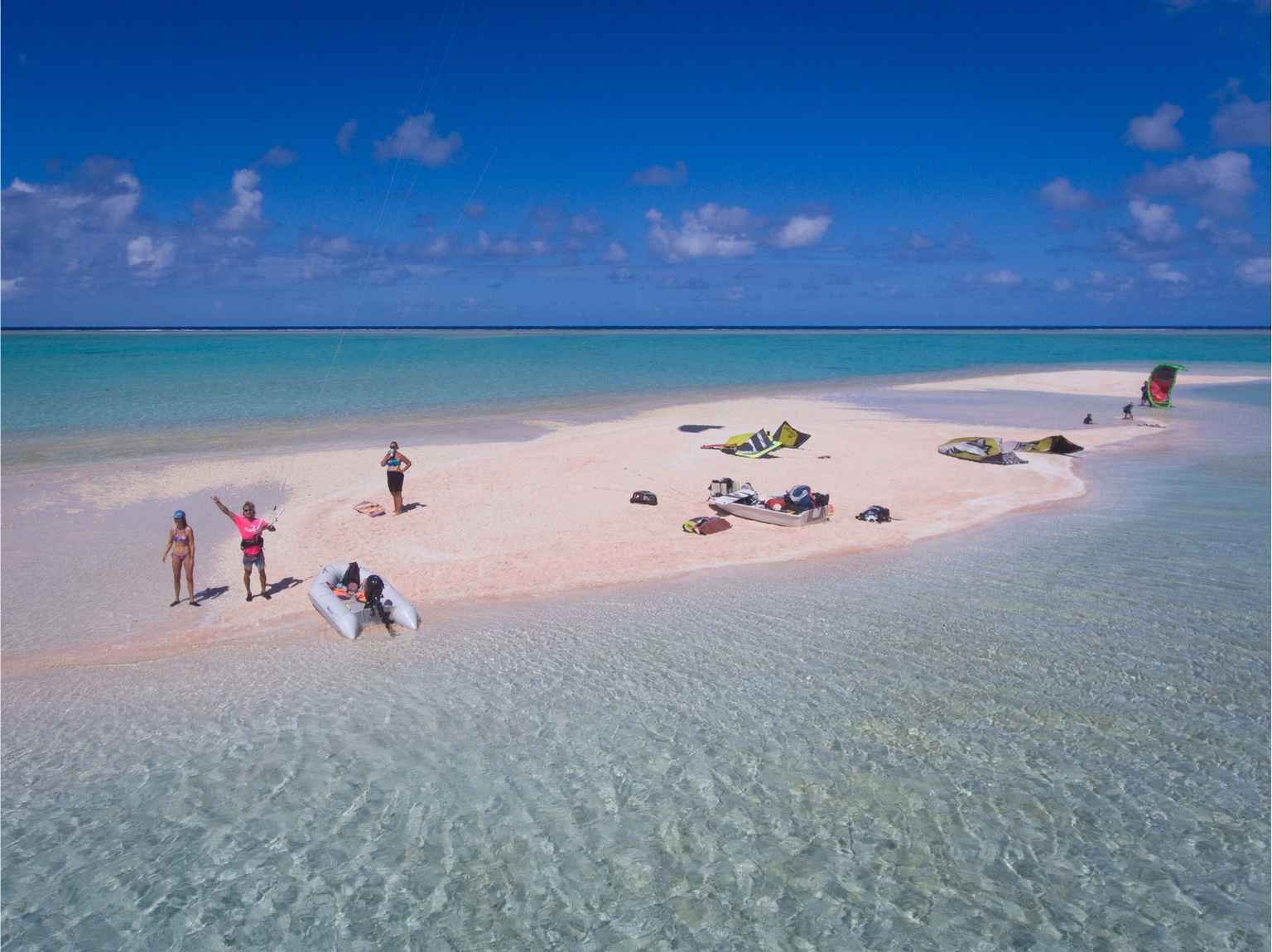
Tuamotus : Hirifa sandbank in the atoll of Fakarava
Caribbeans or Pacific : our opinion
Sailing in the West Indies is generally more accessible than in Polynesia. However, the beauty, variety, and cultural richness of the scenery are less striking. The West Indies are perhaps better suited for discovering life by boat during charters in the different archipelagos or for the first few months of a sabbatical year. In contrast, Polynesia is truly the trip of a lifetime and requires thorough preparation.
To make your big trip as easy as possible, take advantage of our personalized support by participating in the Pacific Puddle Jump on your new catamaran, buying your pre-owned boat from our team in Tahiti, or opting for a long-term charter.
Let’s talk about your blue-water sailing project !
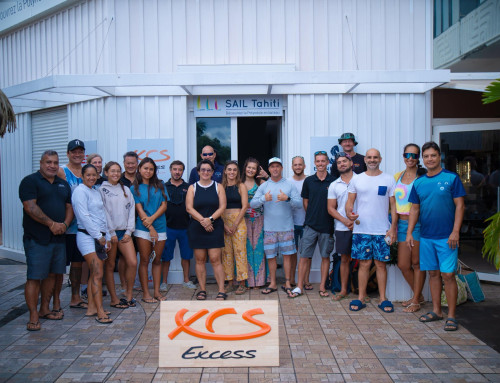
Sail Tahiti : a team of passionate sailors at your service!
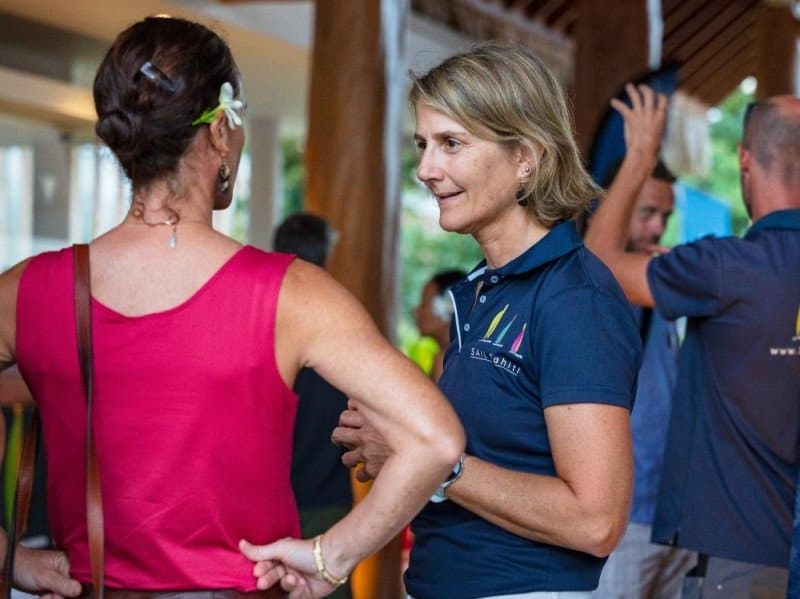
Meet Nikki, an accomplished sailor at the helm of Sail Tahiti
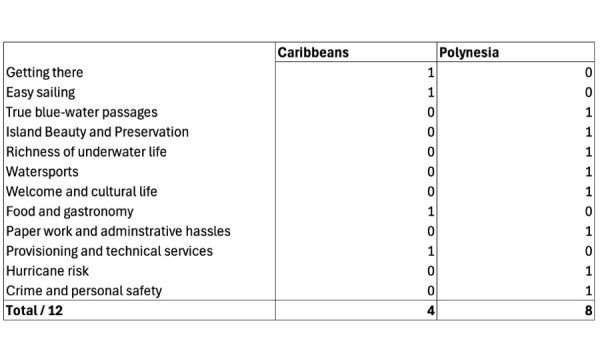
Our detailed analysis of sailing in Polynesia and the Caribbean will help you make the right choice.
The Caribbean is the easiest place to get to.
The Caribbean is undoubtedly easier to reach than Polynesia if you’re traveling from Europe or the East Coast of the United States. It takes between eight and nine hours to fly there, as opposed to 22 hours for a flight from Paris to Papeete. Logically, airfares to the West Indies are more affordable, which makes it easier to bring family and friends aboard your future boat. This may be one reason why the West Indies have lost their wild side. However, there is one exception: for sailors on the West Coast of the United States, Polynesia is closer.
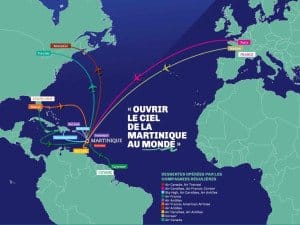
In the French West Indies, a series of short sailings
In the Caribbean, the distances between islands are generally less than fifty miles. Additionally, the islands are located on a north-south arc and are therefore generally exposed to crosswinds. Sailing from one island to the next takes a day or less. This makes it ideal for introducing a family to sailing. Polynesia, on the other hand, boasts 118 islands and atolls spread over five archipelagos and covering an area the size of Western Europe. You can start with a series of short sails in the Society Islands: twelve miles from Tahiti to Moorea and twenty miles from Huahine to Raiatea. However, to discover the Tuamotus and Marquesas Islands, you’ll need to spend several days and nights at sea.
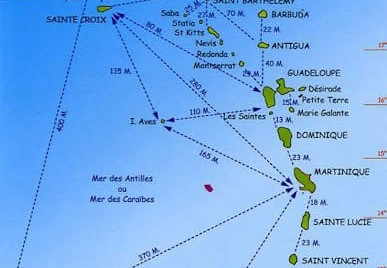
Small hops in the West Indies
True blue-water sailing can be found in Polynesia
Polynesia is undoubtedly a playground more suited to long-distance sailing for the most experienced sailors. There are 900 nautical miles between Tahiti and the Marquesas and 800 miles between the Marquesas and the Gambiers—enough to satisfy sailors in search of the open sea! The trade winds generally blow from the southeast, but there are frequent shifts. From June to August, the Maaramu blows from the south and is a bit stronger. Finally, during the rainy season, there are often a few days of northwesterly winds, which is a real treat for those interested in routing. You can alternate between heavenly anchorages and sailing on the open sea. There’s something for everyone!
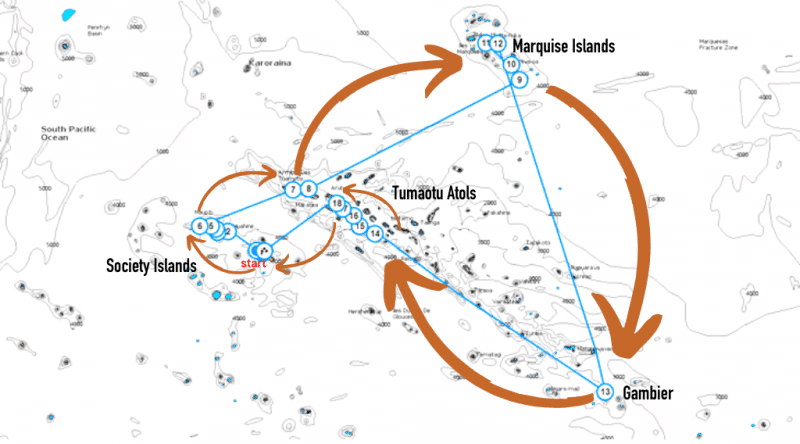
Discover our One-year itinerary in French Polynesia>>>
A change of scenery and variety of landscapes: Polynesia tops the list.
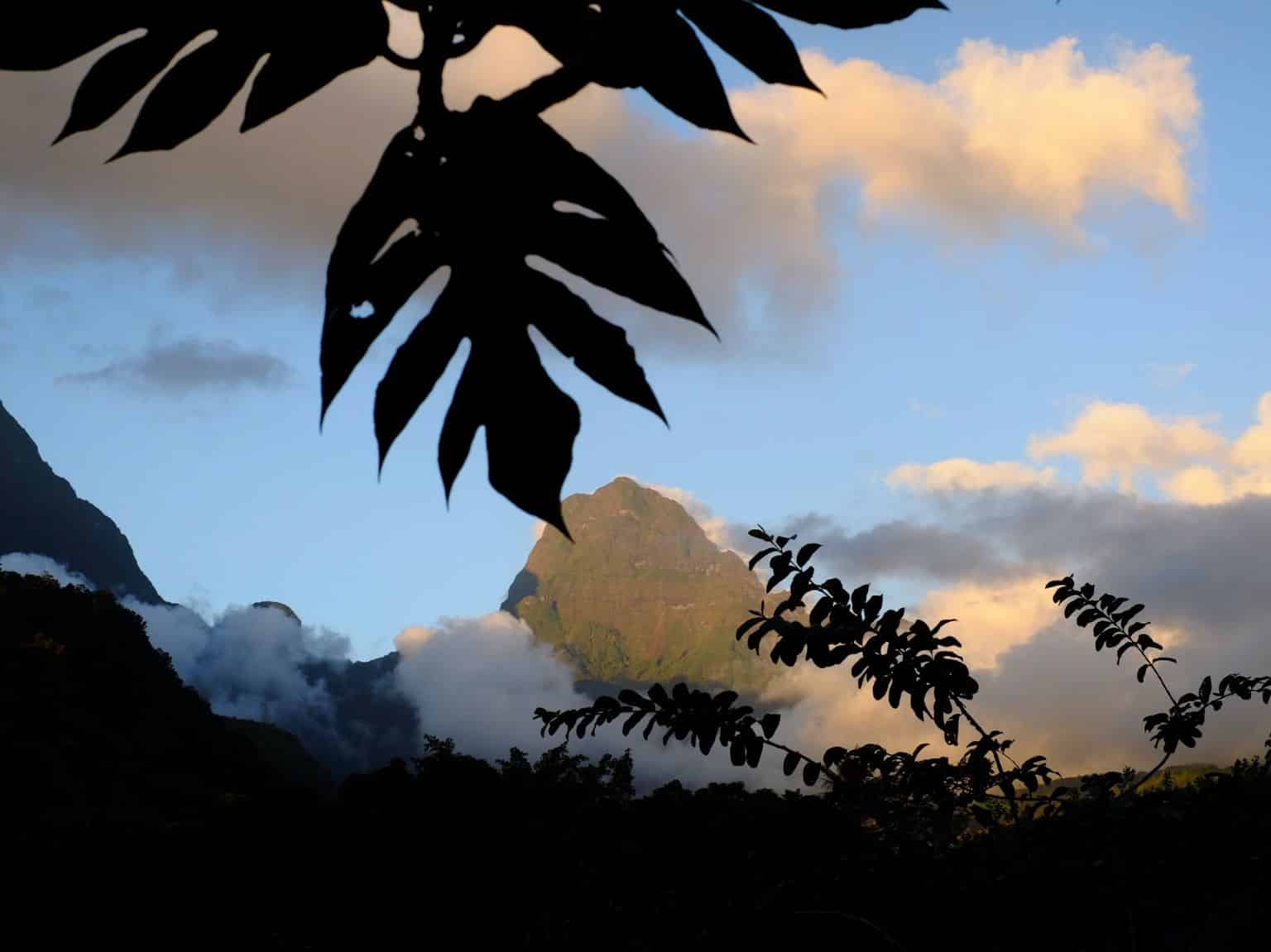
In the heart of Tahiti, the fabulous Orange Tree Plateau hike awaits.
Entering a Tuamotu atoll for the first time or seeing the vertiginous, jungle-covered peaks of the Marquesas rise before you are experiences that leave a lasting impression. The Caribbean certainly has its advantages, but the scenery is not as dramatic, nor is there as much variety. The Caribbean consists of four types of islands: limestone islands, such as the Bahamas and Barbados; ancient volcanic islands covered in limestone, including the Saint-Martin–La Désirade arc, the islands of the southern Antilles, and the Cayman Islands; recent volcanic islands, including the arc stretching from Saba to Grenada and the islands of Dominica, Martinique, Saint Lucia, and Saint Vincent; and mixed islands, such as Guadeloupe and the Greater Antilles.
Polynesia has three types of islands: young islands, such as the Marquesas, with volcanic slopes that plunge almost vertically into the Pacific Ocean; older islands surrounded by a lagoon bordered by a coral reef formed where volcanic slopes met the sea several million years ago; and atolls, where ancient volcanoes have disappeared, leaving only coral reefs that create marine oases in the vast South Pacific. The ecosystems and landscapes differ radically. The Marquesas have jungle-covered volcanic slopes, countless waterfalls, and an abundance of tropical fruits. In contrast, the Tuamotus have sandy islets dotted around coral reefs. These islets are covered with shrubs and coconut palms. There is very little fresh water, making it almost impossible to grow fruit and vegetables. However, there is an unimaginable profusion of fish.
Away from mass tourism …in Polynesia
To find a pristine anchorage in the West Indies, you’d have to go back several centuries. Colonization, the slave trade, large-scale sugarcane production, and mass tourism have all taken their toll, and the region no longer resembles Robinson’s island. Fortunately, a few unspoiled islands remain, such as Dominica. However, the Caribbean cannot compare with Polynesia, which has just 270,000 inhabitants in a territory the size of Europe. In contrast, Martinique has 360,000 inhabitants, and the Bahamas has 400,000. As for deserted anchorages, the tiny Virgin Islands archipelago alone has nine times as many charter catamarans as all of Polynesia.
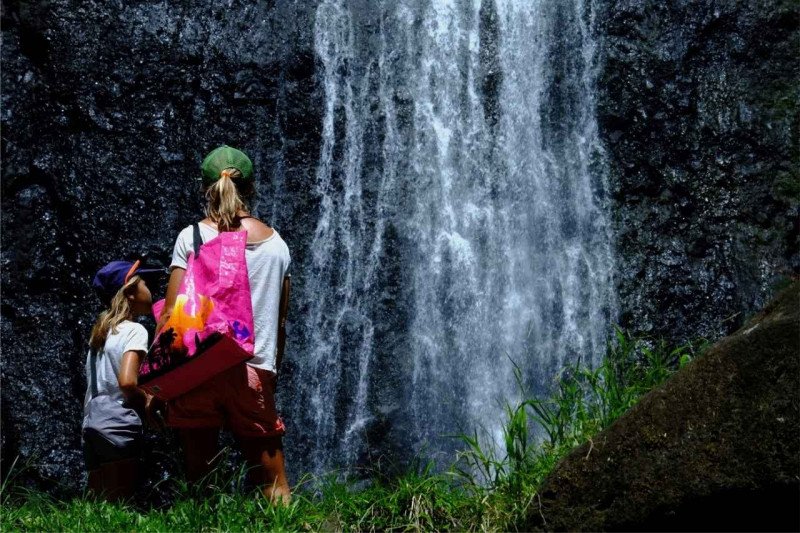
Tahiti is famous for its beautiful waterfalls
Pacific coral reefs are home to an array of underwater life.
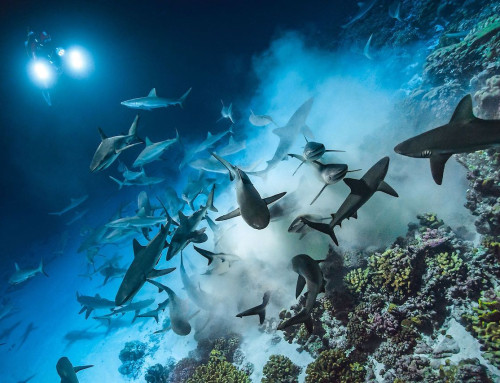
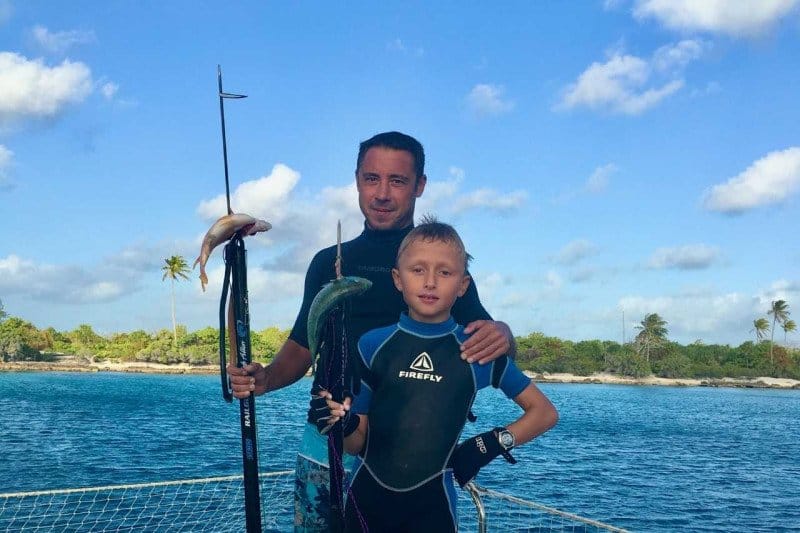
When you put on a snorkel and submerge yourself in the waters of Polynesia, you instantly feel as if you’re in the heart of a tropical aquarium. There are no glass barriers, and the abundance of colors, coral species, and fish is unforgettable. The Tuamotus Passes, where large open-sea predators, atoll fish, and reef species converge, are among the world’s most beautiful dive sites. Diving in the West Indies offers magnificent discoveries as well, but the coral is less developed, and pesticides have had a significant impact on the fauna. For lovers of underwater life, few places rival Polynesia.
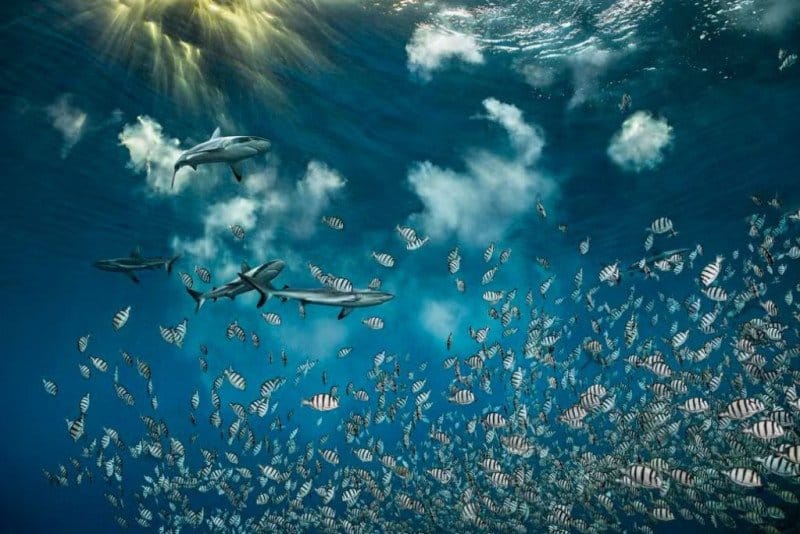
The Tuamotus reefs are among the most beautiful in the world (photo Laurent Ballesta)
Is Polynesia so much better for watersports?
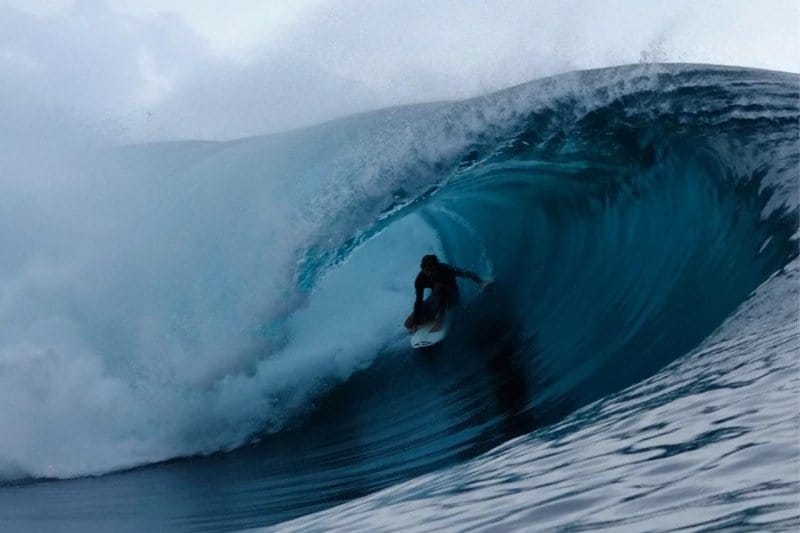
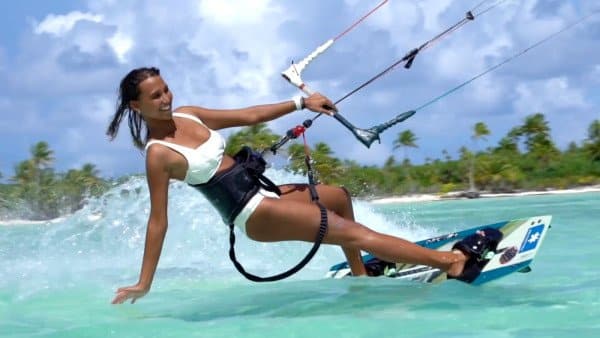
When it comes to kitesurfing and wingfoiling, it’s hard to choose between the Caribbean and the South Pacific, as both destinations boast many magnificent spots. From the shallow stretches caressed by the trade winds in the Bahamas and the Tuamotus to the coastal acceleration along the islands, there’s something for everyone. When it comes to surfing, Polynesia is undoubtedly the place to be. The sport was born there centuries ago, when ancient Polynesian nobles (Ari’i) battled it out on the waves. The entire Pacific region boasts some of the most legendary surf spots: Pipeline in Hawaii, Teahupoo in Tahiti, and Cloudbreak in Fiji, to name a few. However, be warned that most Pacific spots are reefs and are not recommended for beginners. From November to March, you can learn to surf on the beach waves along Tahiti’s north coast. Otherwise, it’s better to have quite a bit of experience or to have learned on the spot from an early age.
Polynesia’s cultural life is fascinating.
It’s difficult to choose between the richness of Creole culture and the authenticity of Polynesian culture. However, Creole culture, born of intermingling populations, seems more accessible, as it exists in certain districts of large European or American cities.
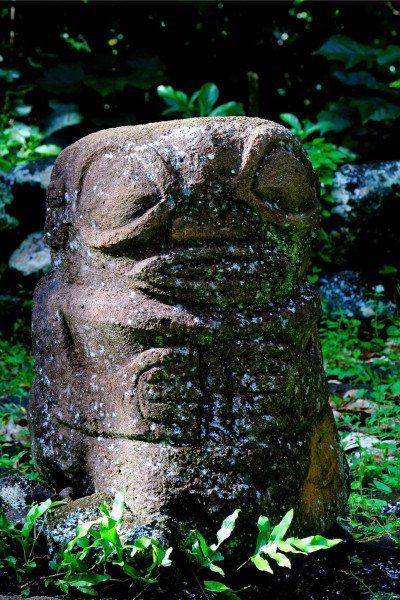
Unfortunately, there are virtually no traces of pre-Columbian cultures left in the West Indies. Conversely, Polynesians have preserved and revived the culture of their ancestors, the sailors who populated the Pacific Islands. This culture, known as the Maohi tradition, extends from New Zealand to Easter Island and Hawaii. Tattoos, dances, songs, and archaeological remains reveal part of the mystery of this millennia-old civilization on a trip to Polynesia.
Gastronomy: Creole spices!
From tropical fruits galore to fresh fish cooked in coconut milk and wild pigs roasted in underground ovens, setting sail in Polynesia allows you to experience the authentic flavors of fresh food that hasn’t been mass produced. However, what’s missing is the richness of spices and the variety of Creole cuisine.
Administrative formalities: a real headache in the Caribbean
Polynesia is an overseas territory covering an area the size of Europe. In other words, you only have to go through the formalities once to travel between islands. If you’re a European arriving by plane, all you need is a passport. If you’re not from Europe, you’ll receive an automatic tourist visa valid for three months. If you wish to stay longer, you’ll need to apply for a long-stay visa, which is usually not difficult to obtain. If you arrive by sailboat, you only need to complete the entry formalities when you arrive in the Marquesas Islands.
On the other hand, there are 13 sovereign states and 18 dependent territories in the Caribbean. This means you’ll have to go through entry formalities 31 times if you want to visit them all, which is enough to get boring! For example, if you’re traveling from Martinique to the Grenadines, you’ll have to go through formalities in Saint Lucia if you stop overnight.
The West Indies are highly developed in terms of technical services and procurement.
Yachting in the West Indies has been well developed for several decades, which greatly facilitates supplies and technical stopovers. Each island has one or more chandleries, marinas, and shipyards, so there are plenty of places to maintain your boat.
Polynesia, on the other hand, is a vast unspoiled territory with only a few places where services for sailors are available. Both Tahiti and Raiatea have several marinas, major dry dockyards, and several ship chandlers. The Marquesas now have a shipyard in Hiva Oa, as well as a few small chandleries and yacht services. The Tuamotus have no chandleries, but they have one shipyard in the Apataki Atoll and yacht services in Fakarava and Rangiroa.
Crime : Polynesia is safe.
In Polynesia, the risk of aggression is virtually nonexistent. In some Caribbean islands, however, you need to be on your guard because poverty and drug use can lead to muggings or burglaries on your yacht.
Cyclones: The Caribbean is a high-risk area.
Unfortunately, it is prevalent throughout the Caribbean from June to September. This seriously limits the possibility of sailing for an entire year without having to make a return transatlantic crossing to Europe. When discussing a sabbatical year of sailing in the West Indies, it’s really a 6-month program from December to May framed by two transatlantic crossings.
Caribbean or Polynesia: what’s next ?
After spending a few months in the Caribbean, you have three main options:
- The transatlantic crossing back to Europe is generally more difficult than the outward crossing. You will round the Azores anticyclone to the north and seek westerly winds to avoid the strong lows.
- You can continue westward to Panama and then on to the Pacific to discover Polynesia.
- Another option is to resell your boat. This is a tempting solution if you only have a few months to spare, but it’s not always easy to achieve as the hurricane season approaches. You’ll need a good partner who can find a buyer and look after your boat while you’re away.
The westward route through Polynesia allows you to discover other Polynesian and Melanesian archipelagos, as well as New Zealand, Australia, Indonesia, and Asia. The playground is immense. If you need to return to Europe or the United States, don’t worry. The secondhand market in Polynesia is active and not greatly affected by seasonality. There is a vast pool of buyers: Europeans, Californians, Australians, and New Zealanders. It’s rare to have to wait long to sell your boat.
- The transatlantic crossing back to Europe is generally more difficult than the outward crossing. You will round the Azores anticyclone to the north and seek westerly winds to avoid the strong lows.
- You can continue westward to Panama and then on to the Pacific to discover Polynesia.
- Another option is to resell your boat. This is a tempting solution if you only have a few months to spare, but it’s not always easy to achieve as the hurricane season approaches. You’ll need a good partner who can find a buyer and look after your boat while you’re away.