Excess 13: 350 miles in the Bay of Biscay— a truly seaworthy performance catamaran
Crossing the Bay of Biscay in winter is anything but a pleasure cruise. Cold winds, long seas, confused swells, and the constant feeling of being on unforgiving ground. Setting out in these conditions aboard a brand-new catamaran is accepting a full-scale test—the ultimate one: the real sea.
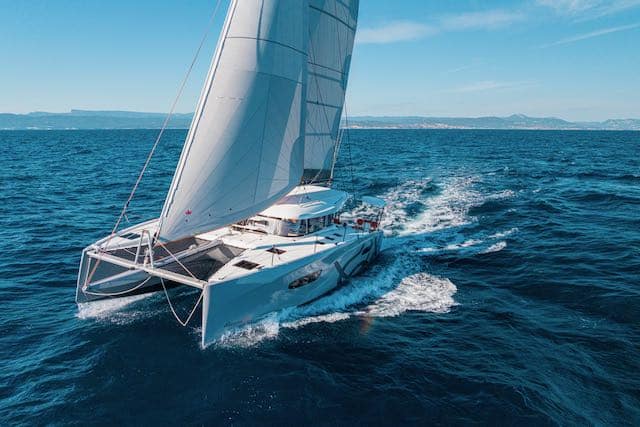
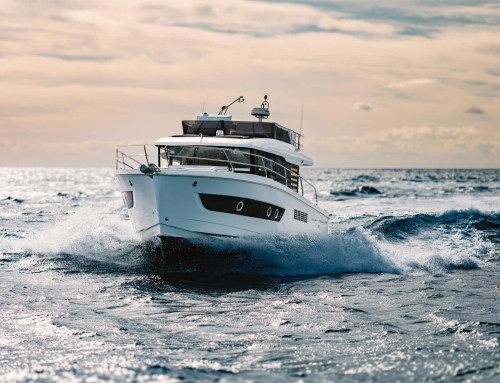
Over 350 miles, most of it hard on the wind, punching into a 5-meter swell and covered in just 48 hours, the Excess 13 proved more than up to the task. Beyond the raw numbers, what stands out is its ease: a boat that always feels comfortable, even when things get tough, combining healthy offshore manners with genuine speed.
Promising trials… but the open ocean as the final judge
I had already seen the boat’s potential during two private sea trials in 2025:
• in La Grande Motte, in under 5 knots of wind;
• in Annapolis, in 23 knots.
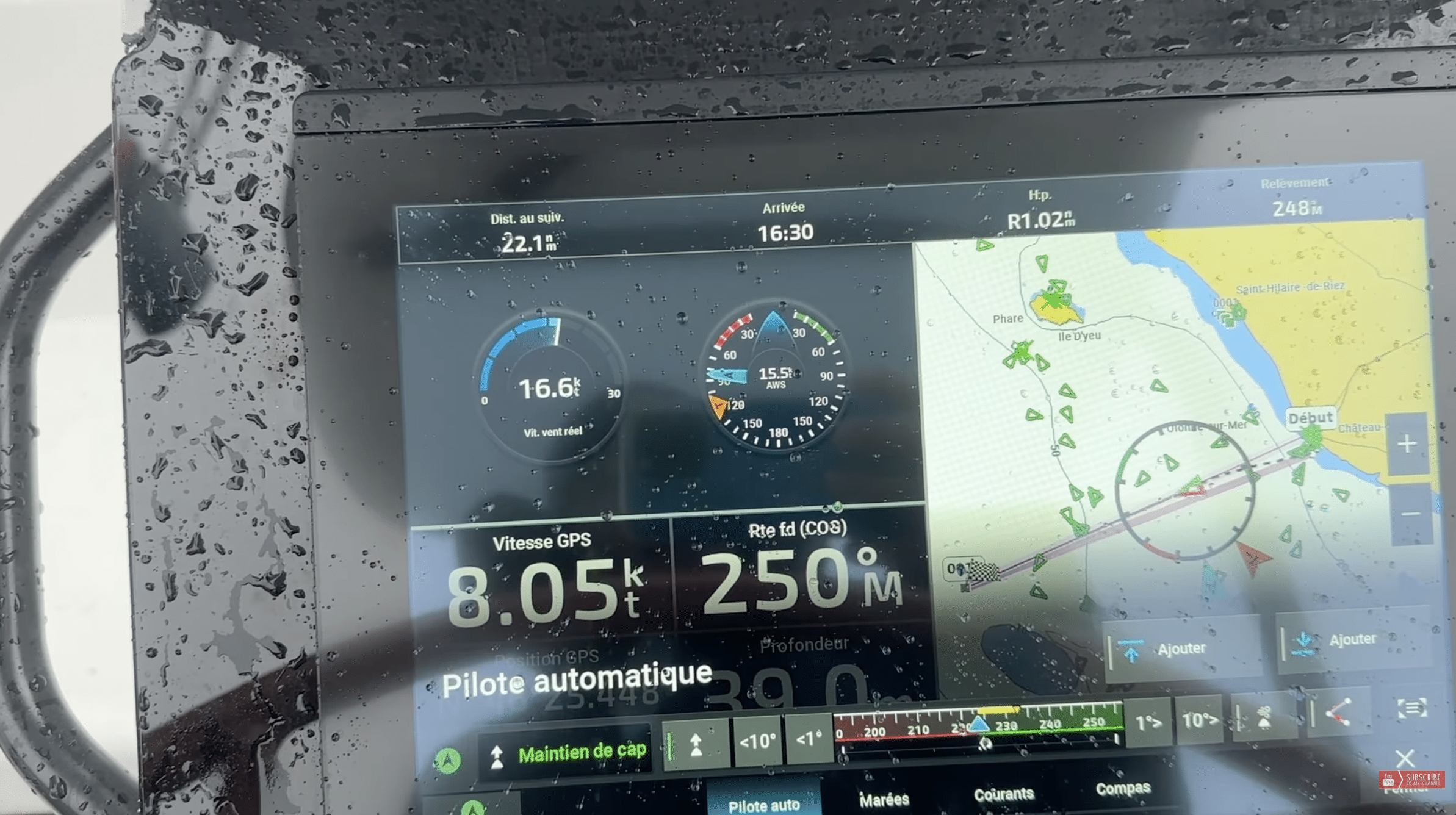
In light Mediterranean air, the Excess 13 slipped along at the slightest puff, leaving the competition behind. In the American breeze, its responsiveness in chop and punchy accelerations made a strong impression. But one essential test was still missing: a long, committed offshore passage, where a boat can’t cheat.
Foggy departure: instant glide
We cast off from Les Sables d’Olonne in thick fog, with around 15 knots from the south-southeast. We set a course slightly north of the direct line to La Coruña to avoid the Rochebonne plateau and its fishing grounds.
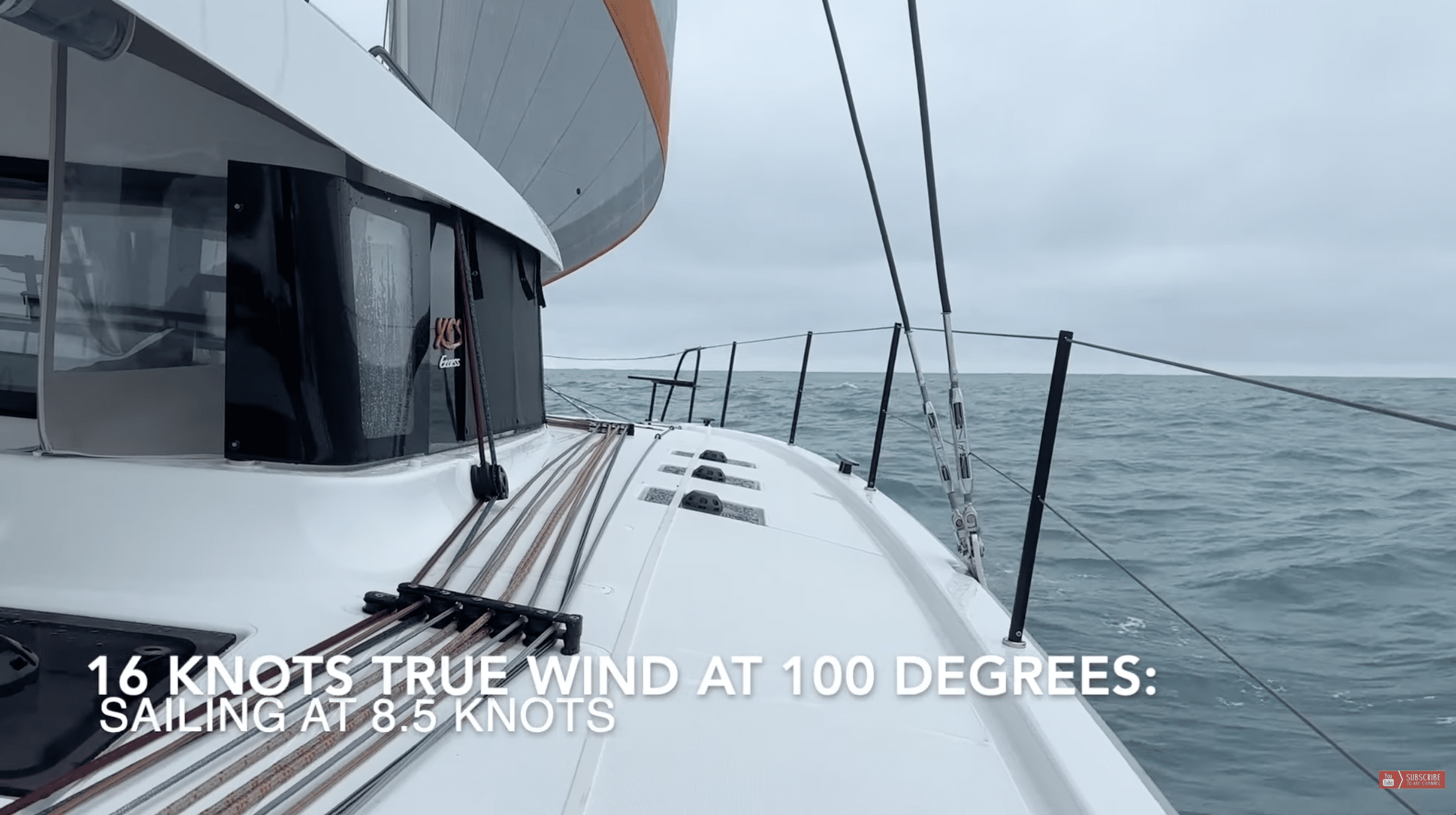
At 100° true wind angle, full mainsail and fully unfurled genoa, the Excess 13 settles in at 8.5 knots. The sensation is striking: clean, effortless glide and a steadiness of speed that inspires confidence.
After nightfall, we tuck in a reef. Speed barely drops.
Upwind: a catamaran that goes through the sea (without slamming)
In the second half of the night, the wind eases and shifts southwest. The program is clear: twenty hours hard on the wind, in confused seas and long swell.
And here the Excess 13 scores a decisive point: it goes through the sea.
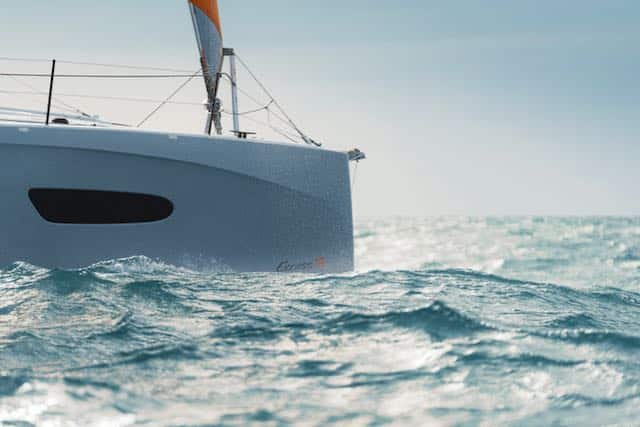
No slamming, very little deceleration as swell trains pass, and an impressive ability to hold its pace. The balance under sail is remarkable—the boat feels “right,” naturally settling into its groove without ever fighting back.
Beneath the surface: coherent design and rigging
This behavior is no accident.
On one hand, the naval architecture: hulls and appendages carefully optimized—slim, deep mini-keels, refined rudders, asymmetric hulls—clearly designed for efficiency, pointing ability, and soft motion through waves.
On the other, a rig setup focused on feel and performance:
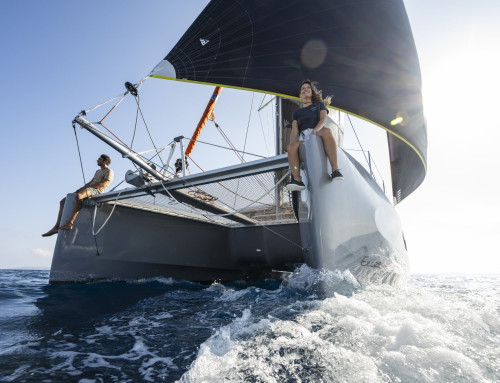
• mast stepped forward of the coachroof, for more centered, natural load paths;
• a low boom extending to the transom;
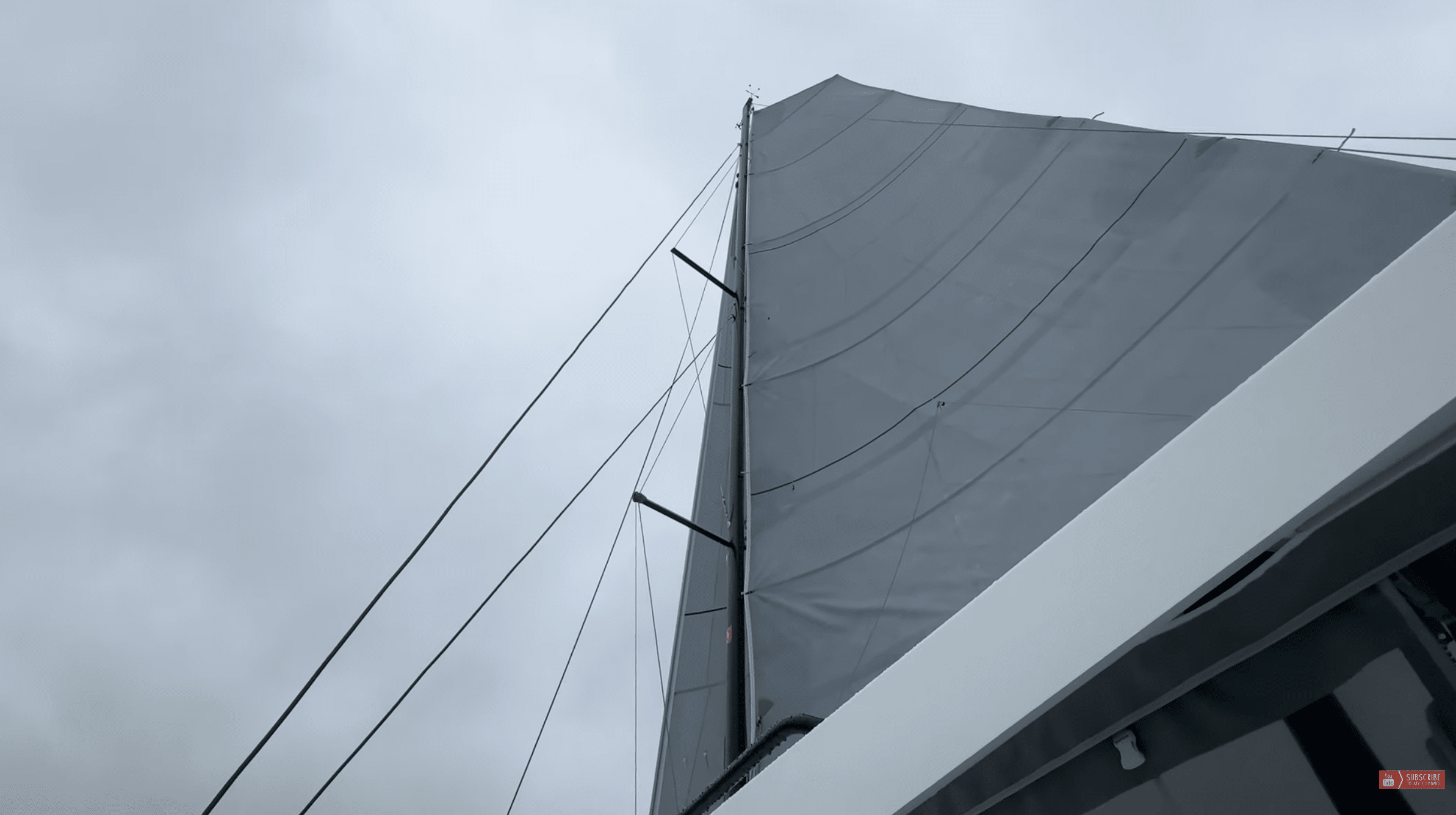
• a mainsail larger than most competitors’, yet well controlled thanks to mast pre-bend—the sail naturally twists open in gusts, like on a performance multihull;
• a high-overlap genoa that delivers power forward and helps punch through swell without killing speed.
Add to that a real focus on weight savings—dual-purpose doors, more open storage—and the sail area–to–displacement ratio approaches that of far more exclusive brands.
Downwind: a catamaran with explosive performance
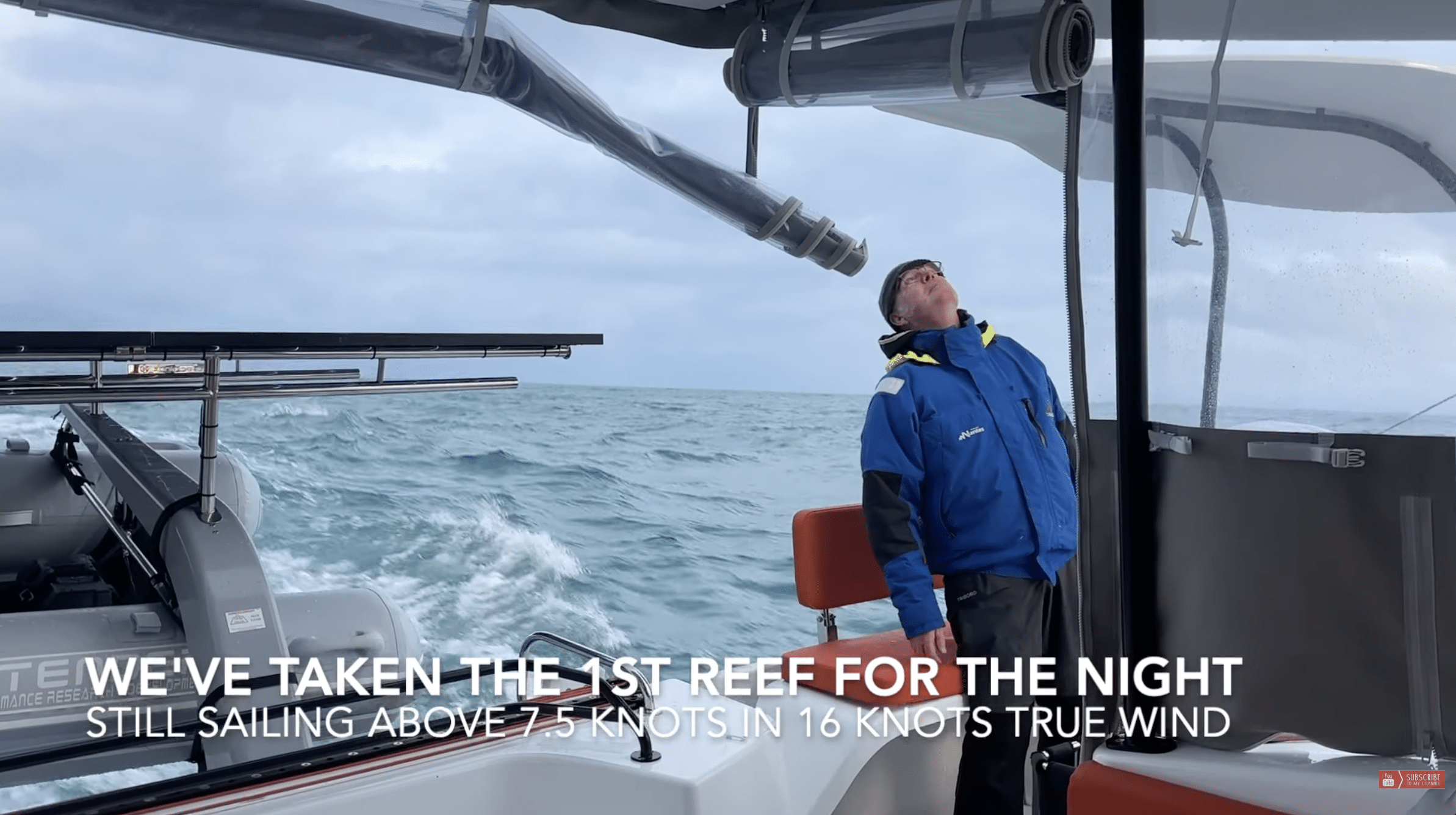
Late on the second day, the wind veers northwest and builds: 22 knots downwind. Ideal conditions to let the boat stretch its legs.
And it doesn’t hesitate.
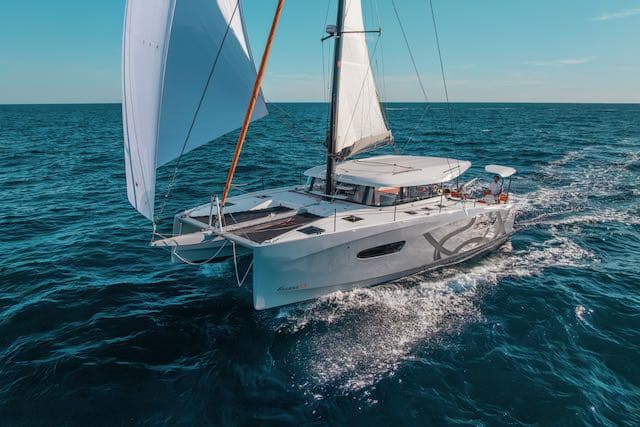
Locked in at 10 knots, the Excess 13 strings together surfs on every wave. At the helm, the sensations are pure joy: a lively boat that plays with the sea and makes you want to push, accelerate, and re-launch.
You find yourself steering for hours without fatigue, like on a far more performance-oriented boat.
And this is without a Code 0… With a full sail inventory, average speeds could clearly climb. On a transatlantic crossing, it’s easy to imagine days over 200 miles.
The unexpected detail: silence
Another surprise—and a big one: the boat doesn’t vibrate. It sails in impressive silence.
On a brand-new catamaran, the first outings in rough seas often come with creaks and groans as the structure settles, bulkheads work, and stiffness evens out. None of that here.
After 48 hours in heavy seas, the Excess 13 remains quiet.
The careful alignment between structural bulkheads and interior partitions delivers a level of rigidity that’s rare in a cruising catamaran—comfort, yes, but also a clear sign of safety and longevity.
Les défauts : quelques points de jeunesse
Of course, there are still details to refine:
• locker latches a bit light for heavy conditions,
• the owner’s cabin sliding door sometimes finicky,
• no anti-siphon valves between toilets and black water tanks,
• shower sump pumps that could use more flow.
But these are largely offset by the success of the interior design by Piaton—sporty, understated, and elegant, with real character and a welcome break from market standards.
Conclusion: the right compromise—and a real proposition
The catamaran market is becoming polarized:
on one side, comfortable “charter-style” boats with little sailing pleasure;
on the other, performance brands that have grown elitist, often over 48 feet and well north of a million euros.
In between, the Excess 13 carves out a rare path: a fast, balanced, playful catamaran that points upwind with surprising efficiency and hits double-digit speeds off the wind—while remaining accessible, both in handling and in price
Above all, it delivers something few cruising catamarans still offer: easy glide.

🟦 TEST AT A GLANCE — Excess 13
Area / route: Les Sables d’Olonne → La Coruña
Distance: 350 miles
Duration: 48 hours
Season: winter (Bay of Biscay)
Conditions: heavy seas, long swell up to 5 m, confused seas
Points of sail: mostly upwind, finishing downwind
Crew / sail setup: full mainsail + high-overlap genoa (no Code 0)
✅ Wind
- • Start: ~15 kts SSE
- • Main phase: 20 h upwind (easing SW wind)
- • Finish: 22 kts NW downwind, building
✅ Recorded speeds
- • 8.5 kts steady on a reach (100° TWA) under main + genoa
- • 10 kts downwind, surfing wave after wave
- • Transatlantic potential: 200+ mile days clearly achievable with full sail inventory (notably a Code 0)
✅ Behavior at sea
- • Very healthy motion through waves: no slamming, speed maintained in swell
- • Outstanding balance under sail: “natural,” easy, low fatigue
- • Remarkable silence: no vibration or creaking despite heavy seas
- • Helm feel: lively, playful, and rewarding
🟩 What we like
- • Easy glide and steady pace, even upwind in rough seas
- • Excellent balance under sail
- • Rare rigidity and silence for a new catamaran
- • Performance-oriented yet accessible rig (pre-bend, natural twist in gusts)
🟥 What we like less
- • Locker latches a bit light in tough conditions
- • Owner’s cabin sliding door could be improved
- • No anti-siphon valves between heads and black tanks
- • Shower pumps with limited flow
✅ Quick verdict
Fast, balanced, fun, and truly seaworthy: the Excess 13 strikes a rare balance between sailing thrills and cruising comfort—without tipping into the elitism of pure performance brands.